Freie Waldorfschule Uhlandshoehe - New School Building and Extension
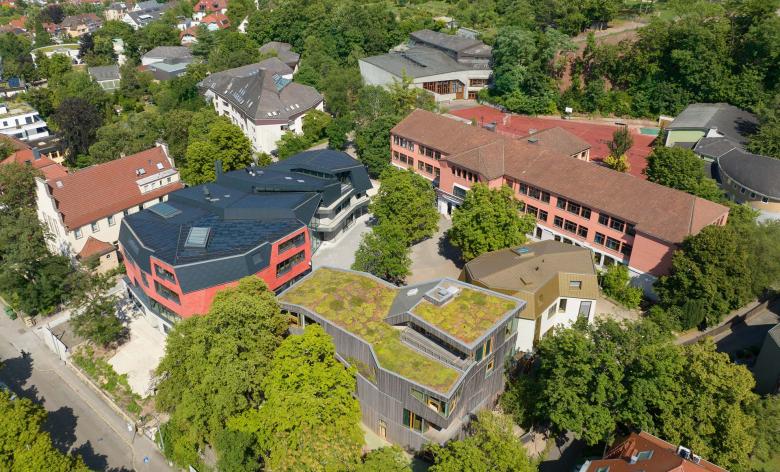
The new school building for the Freie Waldorfschule Uhlandshöhe mediates a complex surrounding while at the same time reflecting anthroposophical design principles. Spaces are characterized more by their architectural qualities than by predetermined functions.
The Freie Waldorfschule Uhlandshöhe, the world’s first Waldorf school, is situated in a hillside residential area of Stuttgart, overlooking the city. The campus comprises a variety of buildings, each exuding distinct architectural qualities informed in part by anthroposophy, some designed by well-known German Architects.
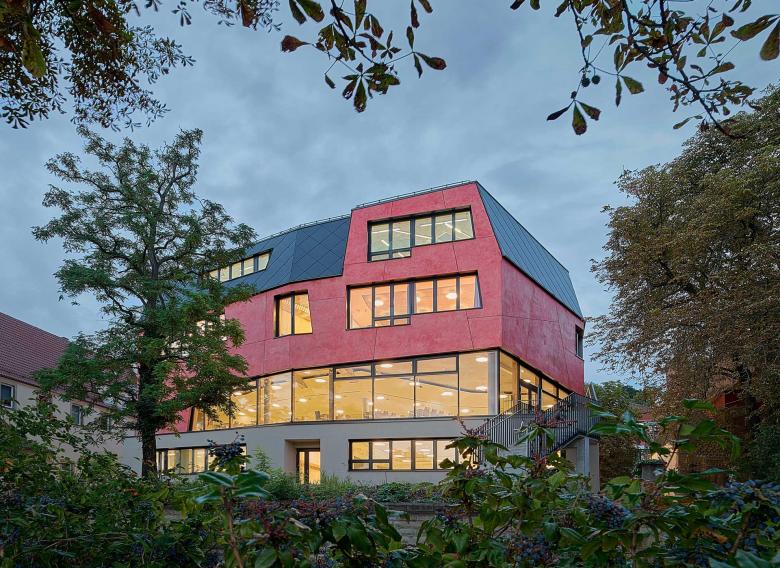
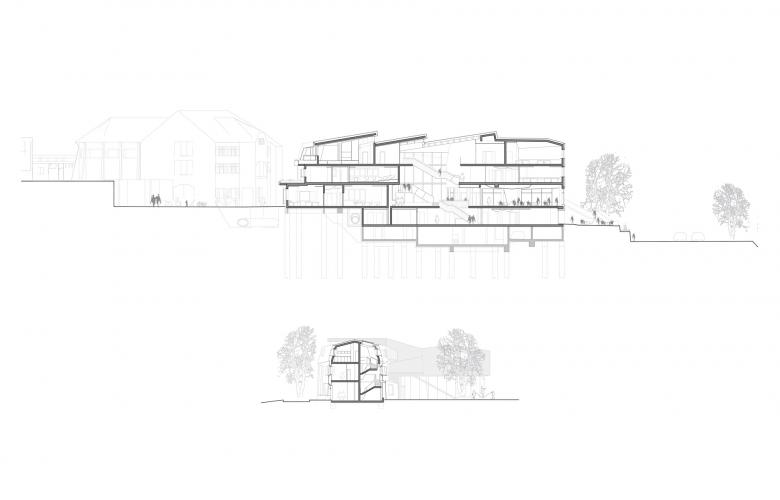
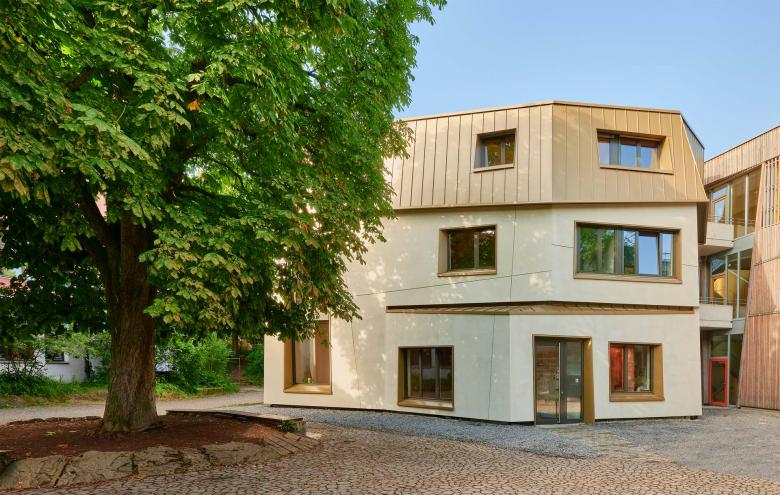
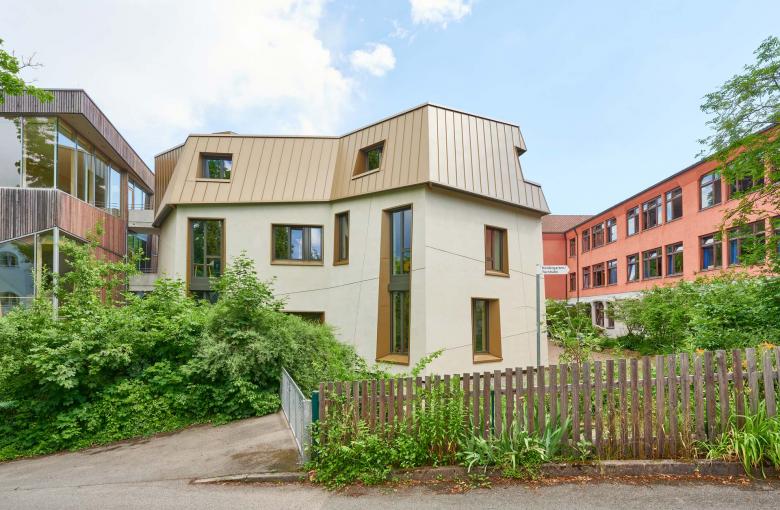
The new school building mediates between these existing conditions while asserting its own identity from a prominent hilltop position now visible from the city center. Its main elevation, facing the street, adopts the scale and character of nearby villas, blending into the neighborhood. This integration is reinforced by the reuse of an existing retaining wall and staircase, which lead to a raised front yard. A horizontal tripartition - comprising a base, two principal floors, and roof - augmented with color, reflects anthroposophical design principles.
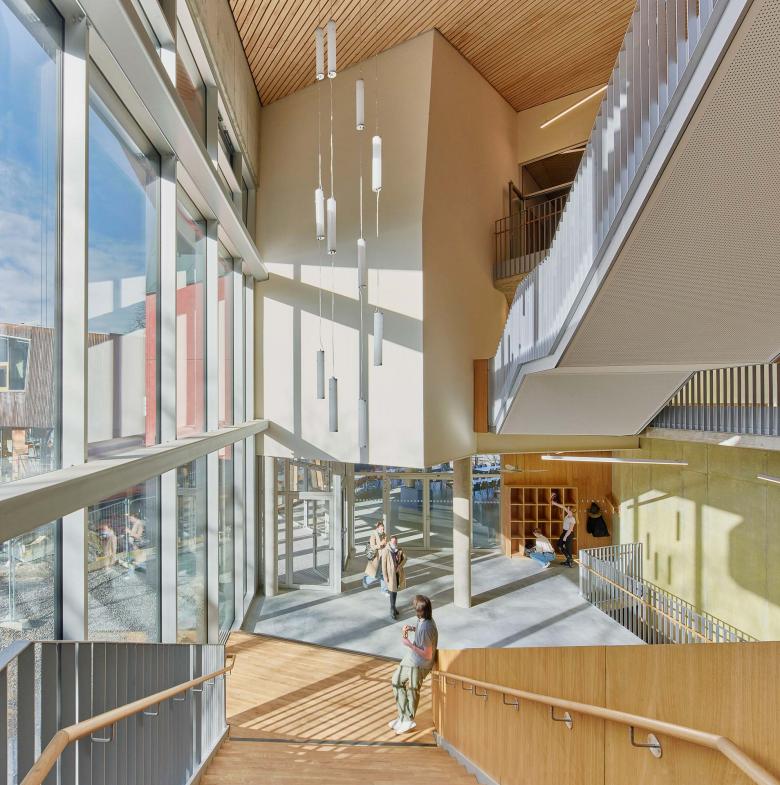
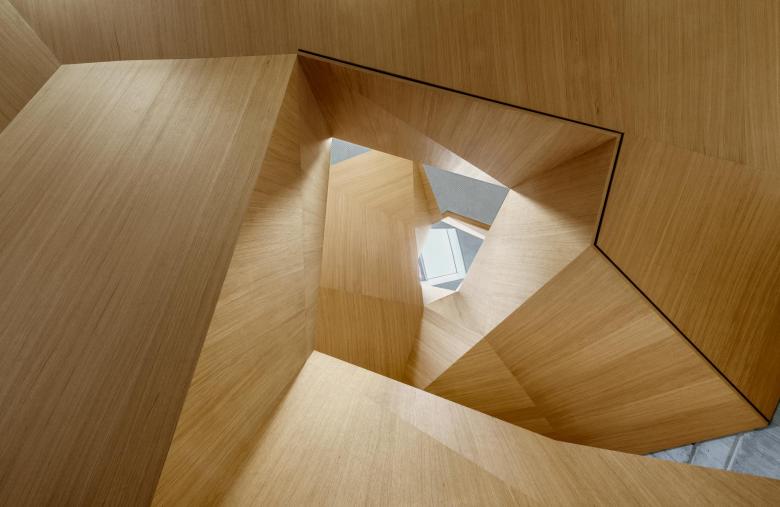
Following the slope of the hill, the building responds to adjacent structures, creating a harmonious architectural dialogue. At its core, a transparent atrium functions as a multi-story vertical schoolyard, extending the school’s outdoor environment inward.
The distinctive black roof - composed of four folded, polygonal segmentsv - echoes the varied roofscape of the campus, including a brutalist performance hall. Its form and the mansard geometry are shaped by local building codes, while its black surface results from integrated solar panels that seamlessly blend into black sheet metal. The red color of the northwestern part nods to the prevailing color scheme of the buildings on campus and enhances visibility from afar.
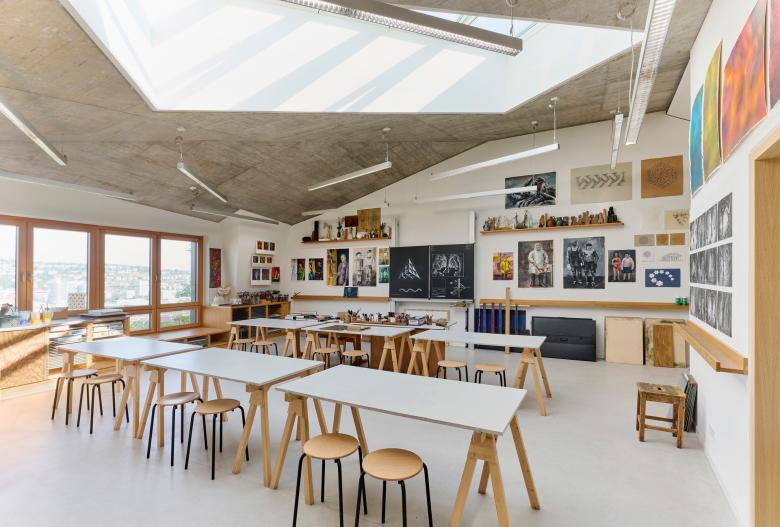
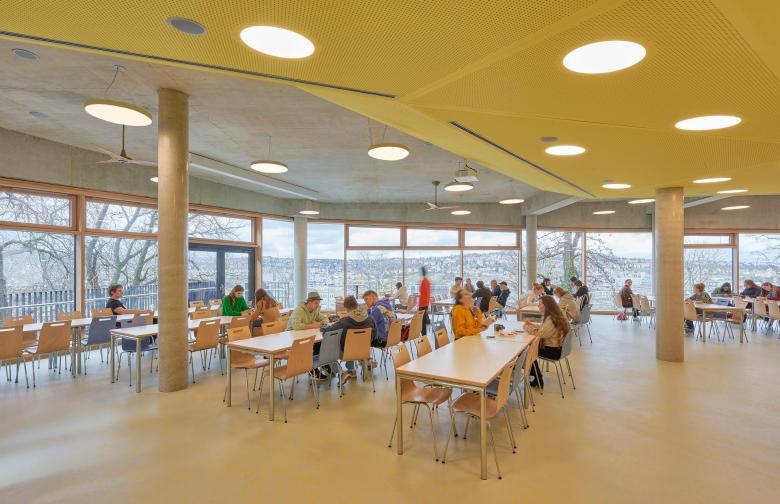
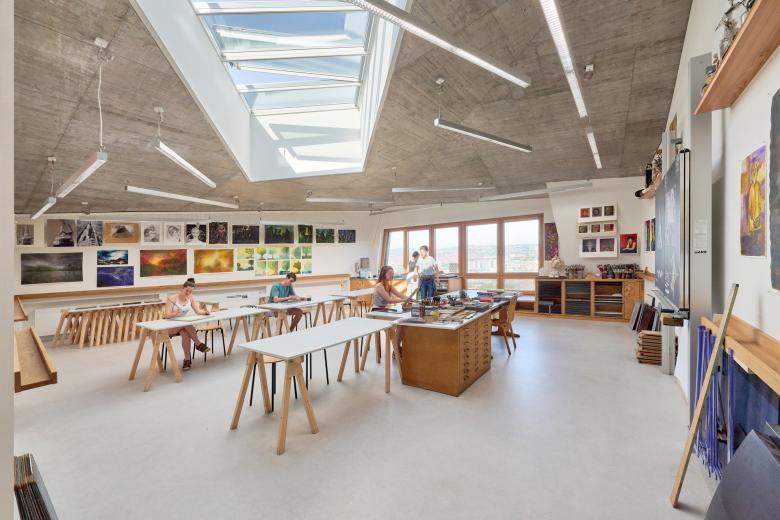
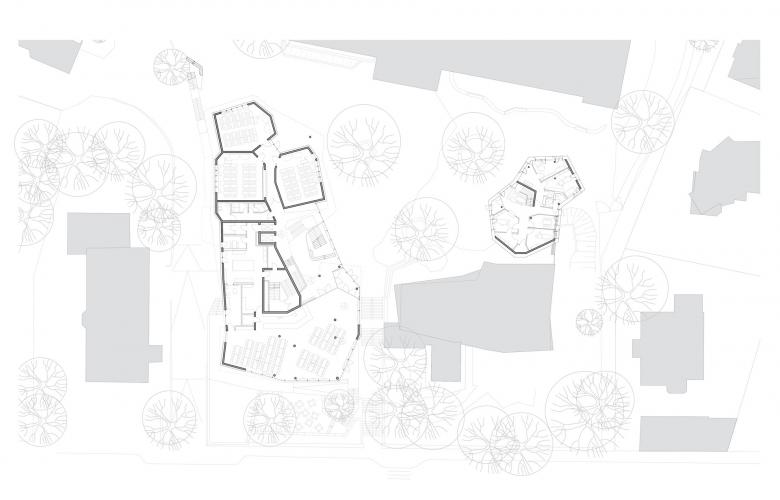
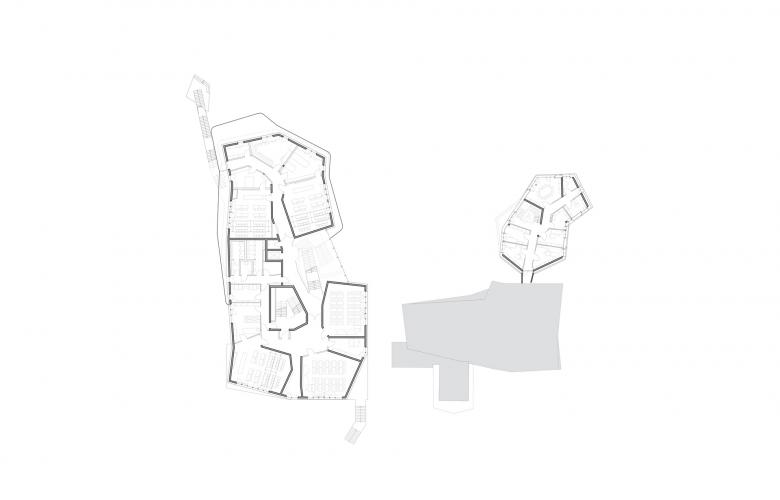
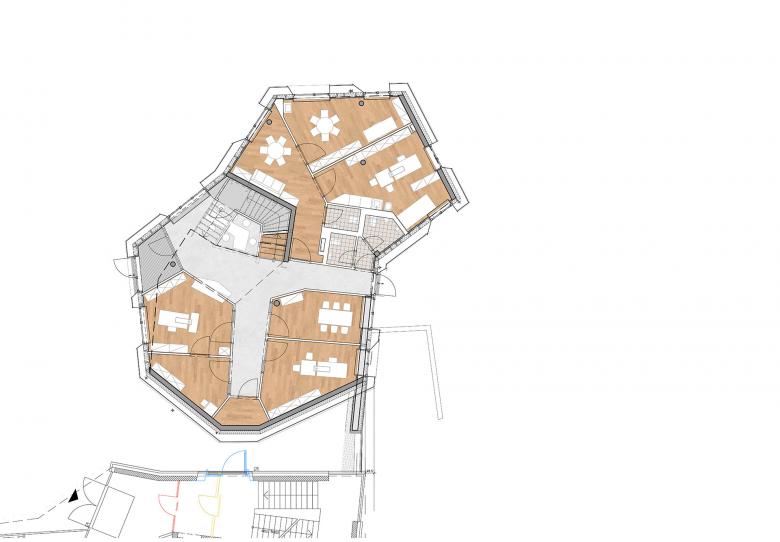
The new building houses classrooms for grades 8 through 13, along with specialized rooms for science, art, biology, geology, metallurgy, and Eurythmics. A spacious cafeteria and kitchen occupy the ground floor. Circulation areas double as informal gathering spaces, fostering community, conversation, and exhibitions.
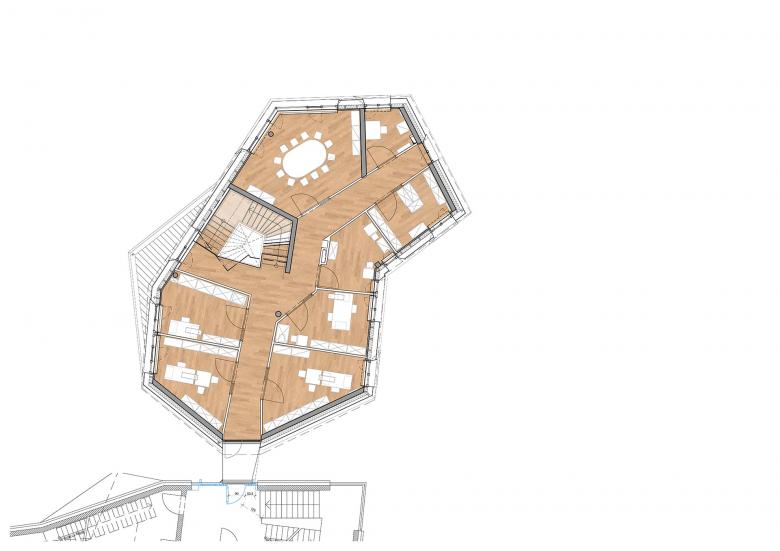
The floor plan embodies anthroposophical ideals, treating architecture as a living organism rather than conforming to orthogonal grids. Spaces are defined not by fixed functions but by their spatial qualities - light, color, sound, flexibility, and a sense of security. Transitions between rooms are clearly marked by doors, emphasizing each space’s distinct character.
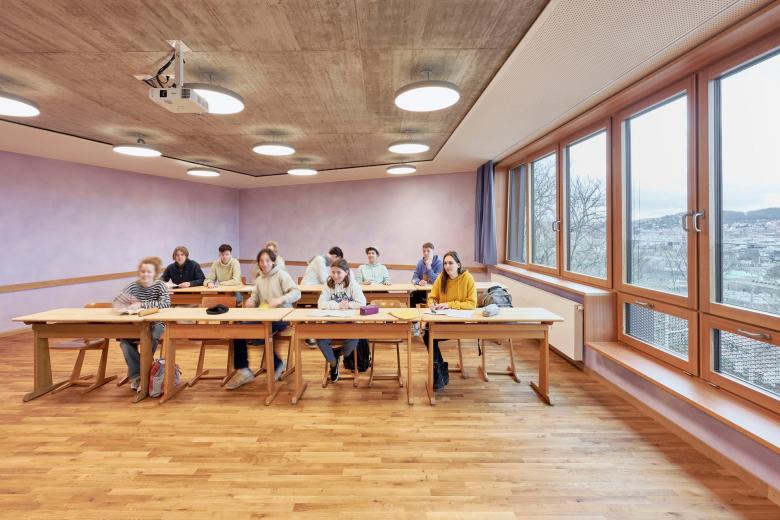
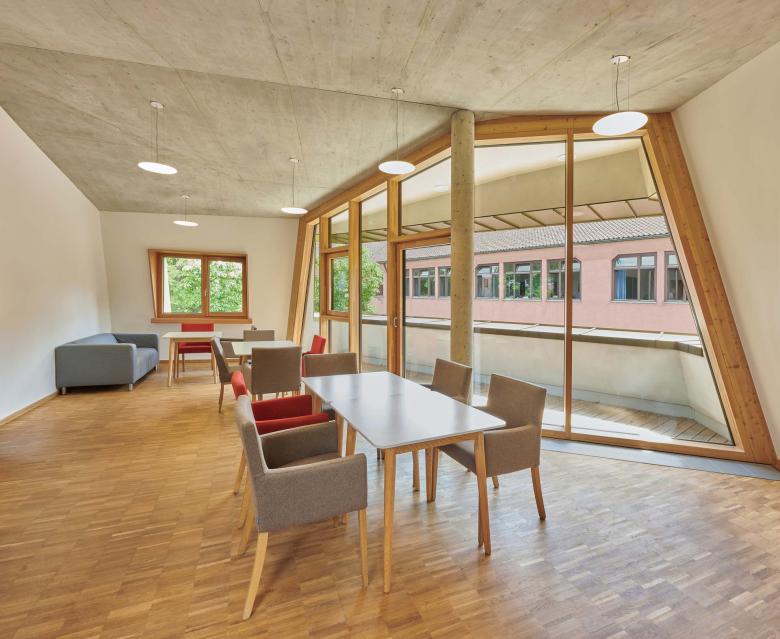
High-quality, sensory-rich materials support this approach: parquet floors in classrooms; linoleum in science rooms; and lime-plastered walls for vapor permeability. The interior color scheme follows Rudolf Steiner’s principles, symbolizing the developmental stages of childhood.
- Ano
- 2023
- Project Status
- Built
- Cliente
- Verein für ein freies Schulwesen, Waldorfschulverein e.V.