The Bloomberg Student Center
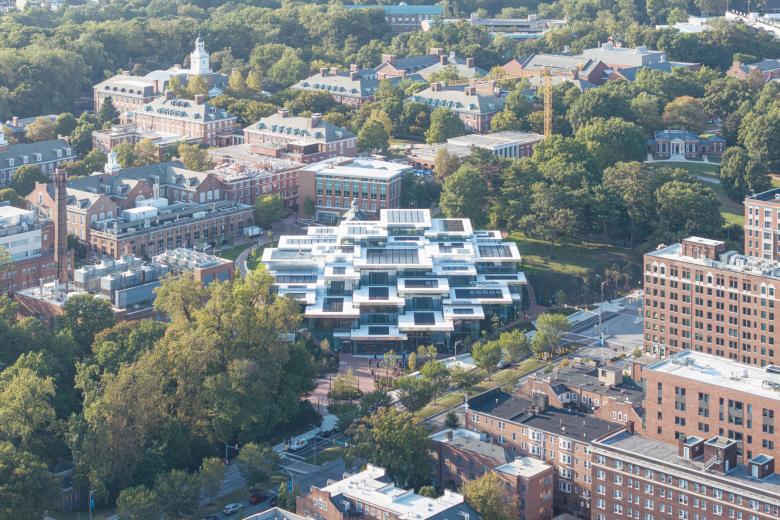
Designed by BIG-Bjarke Ingels Group and interior architect Rockwell Group in collaboration with executive architect Shepley Bulfinch and landscape design by Michael Van Valkenburgh Associates (MVVA), the new 150,000-square-foot building is designed to meet the evolving needs of Hopkins undergraduate and graduate students with a state-of-the-art food hall featuring local vendors, a pub and coffee bar, a flexible 250-seat performance venue, a central atrium with open seating, dance studios, club meeting rooms, recording studios, flexible gathering places, a digital media center, and even an esports lounge. The Bloomberg Student Center is named for Hopkins alumnus Michael R. Bloomberg, Engineering ‘64, founder of Bloomberg L.P. and Bloomberg Philanthropies, and 108th mayor of New York City, in recognition of his extraordinary commitment to supporting Johns Hopkins students.
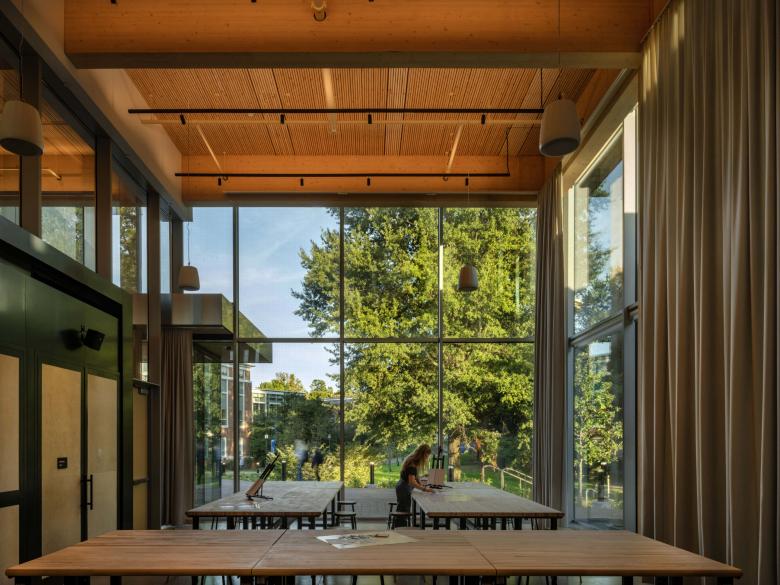
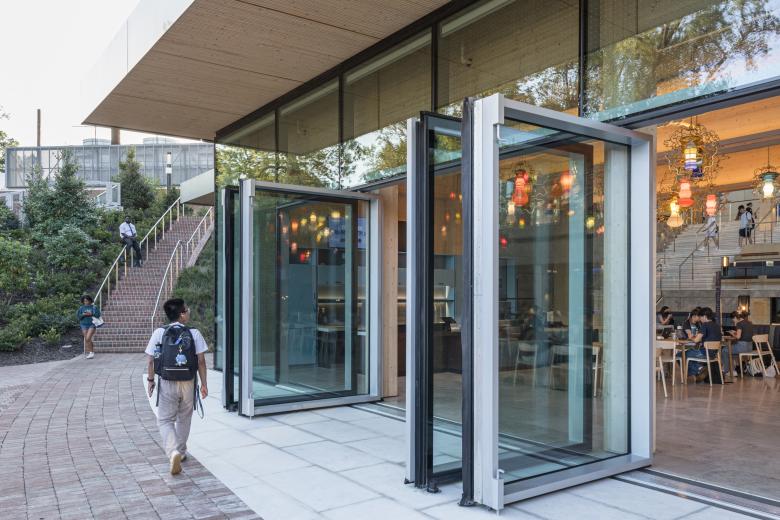
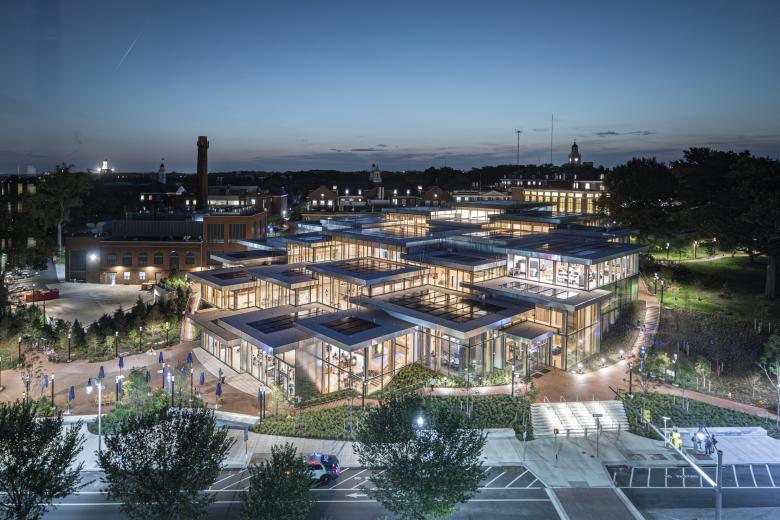
The new facility will serve as a new hub for campus life, connecting members of the Hopkins community to one another from across different campuses, backgrounds, interests, and academic pursuits. Designed to emphasize openness, the Student Center’s rooms and event facilities are flexible and shared by all, with no permanently assigned spaces. The rooms and gathering areas will support both everyday student needs and special events, while promoting engagement among different groups of students and spontaneous connections between individuals. With abundant natural light, the Student Center also contains interior green spaces and exterior patios for students to gather. In alignment with the university’s ambitious sustainability commitments, the project is targeting LEED Platinum certification.
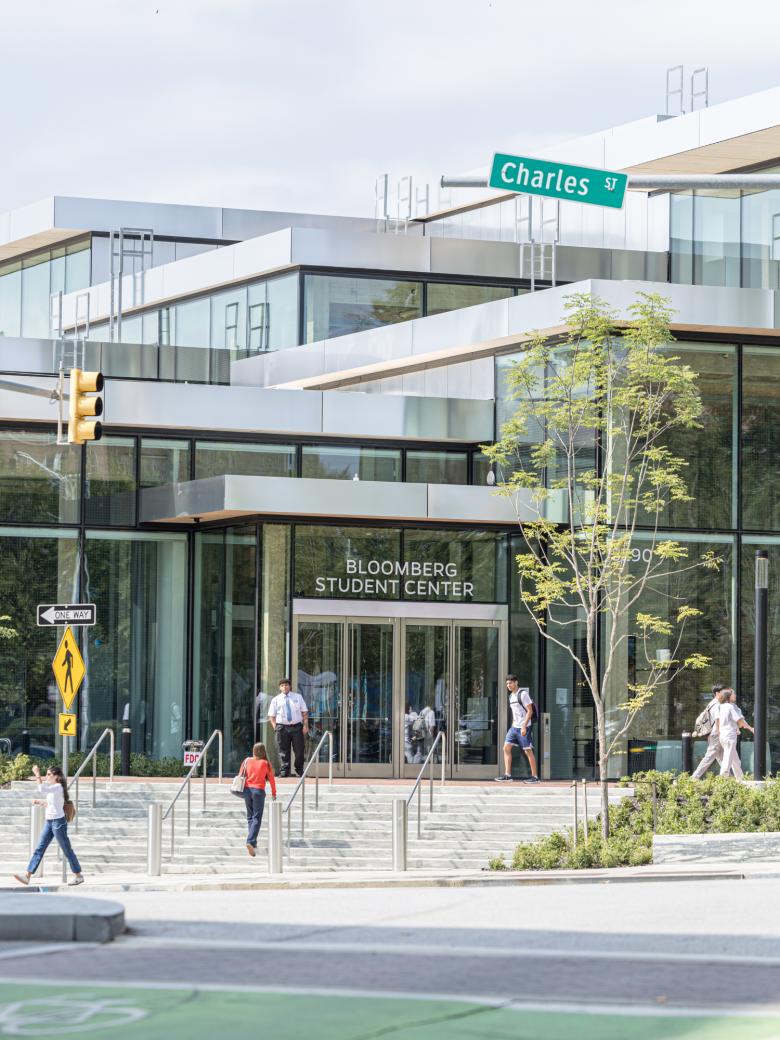
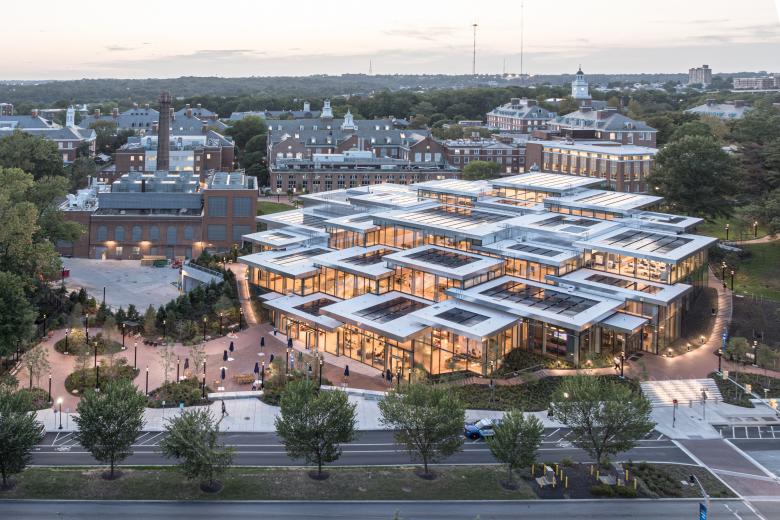
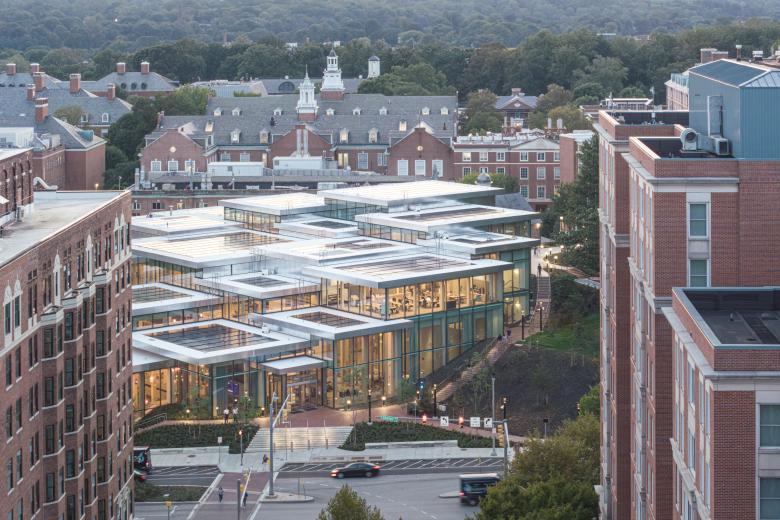
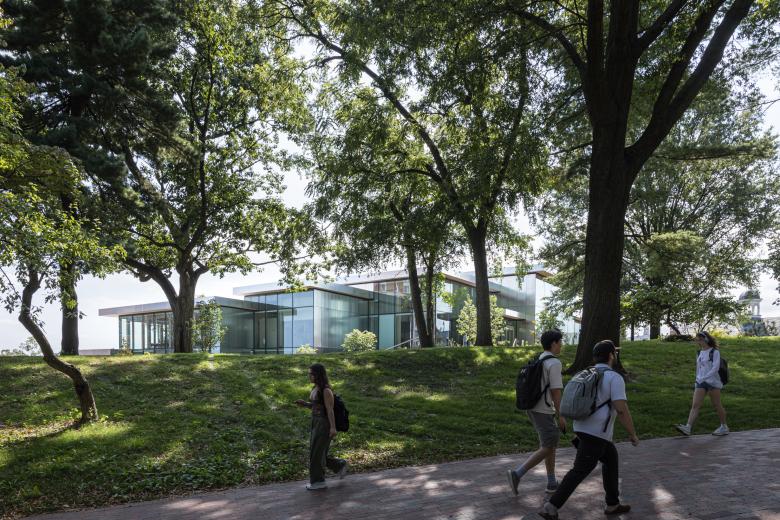
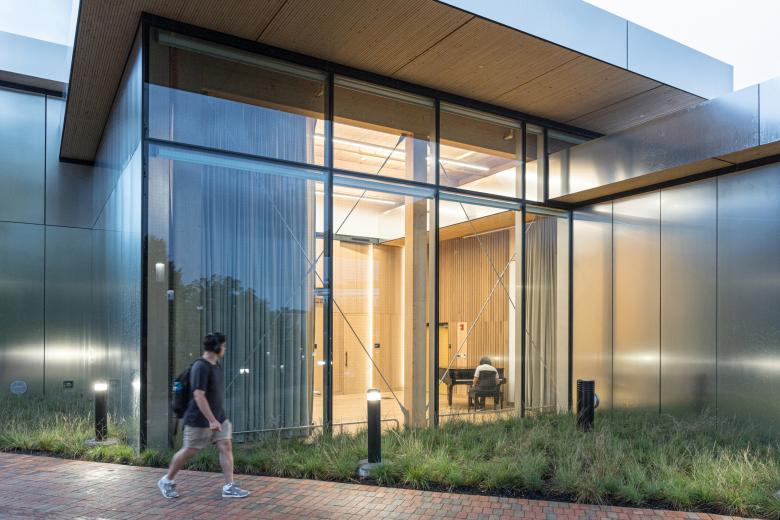
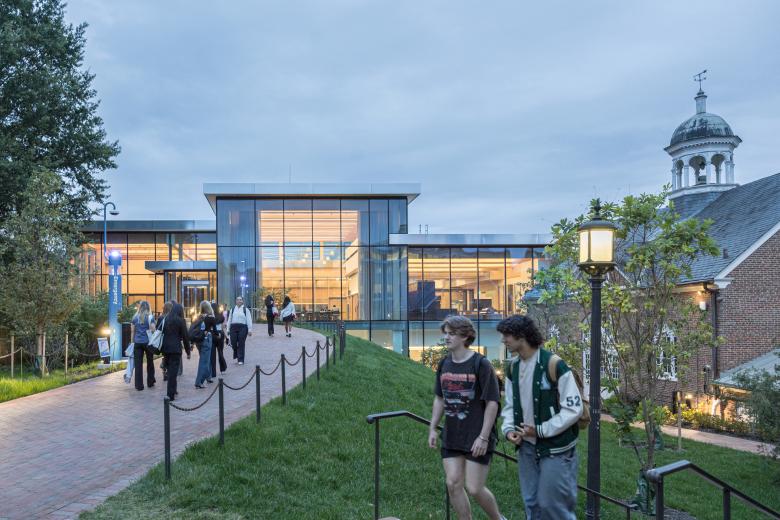
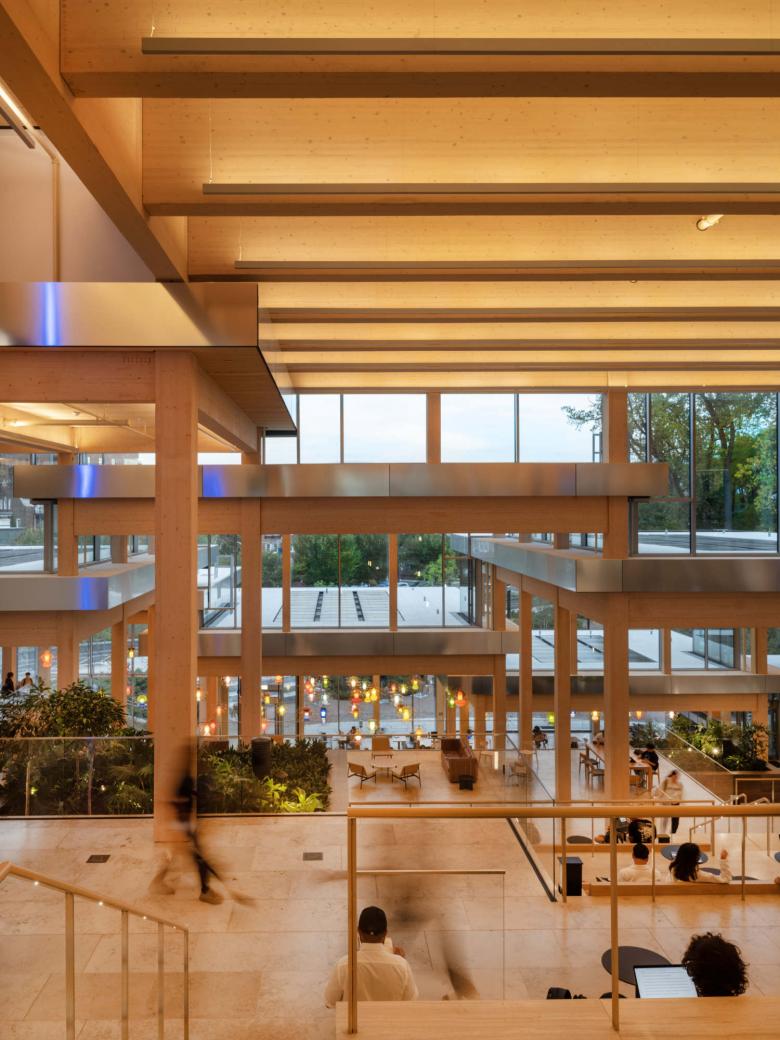
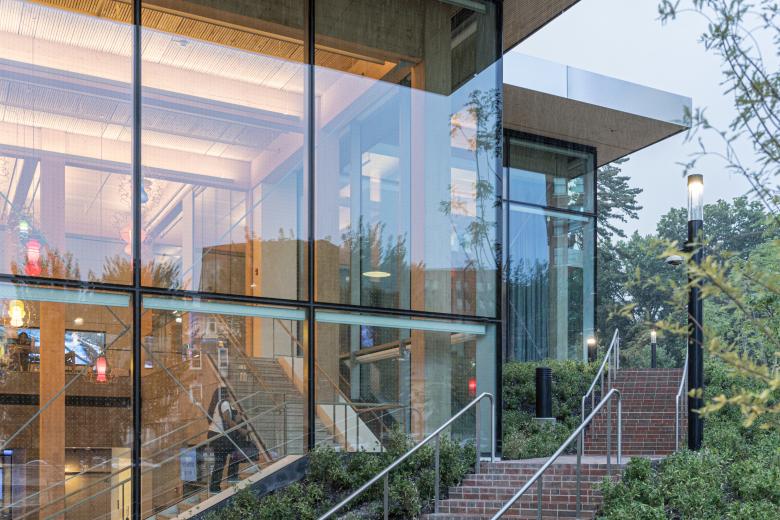
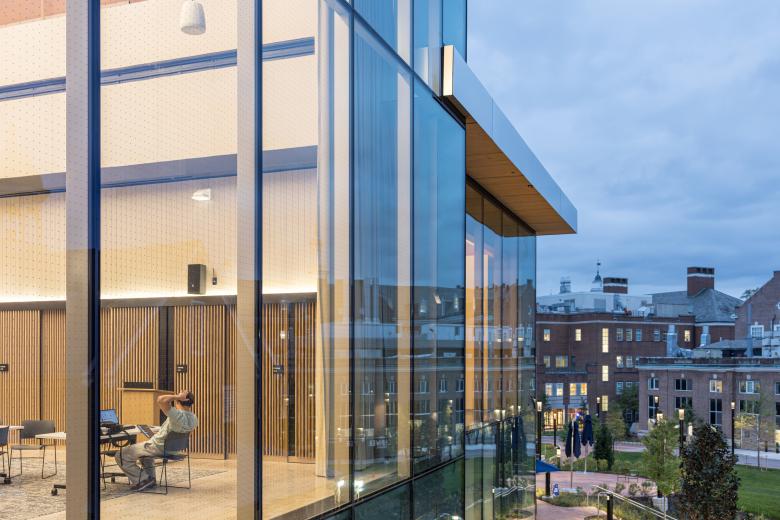
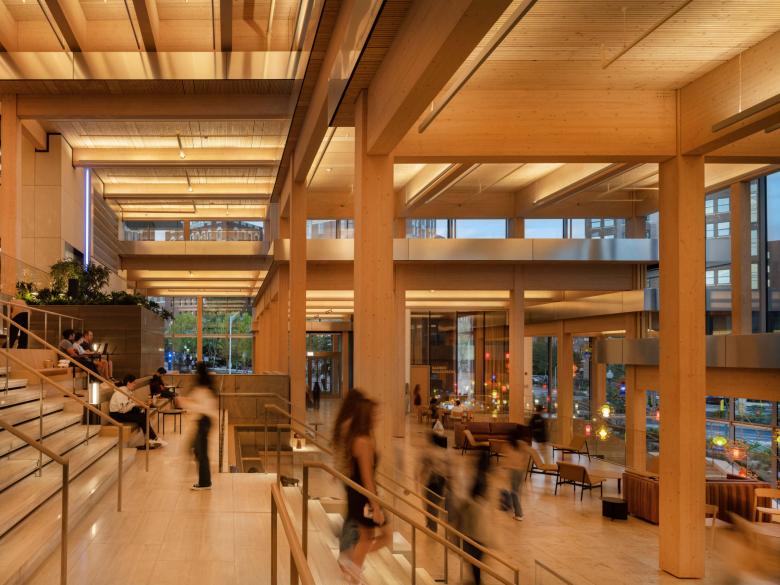
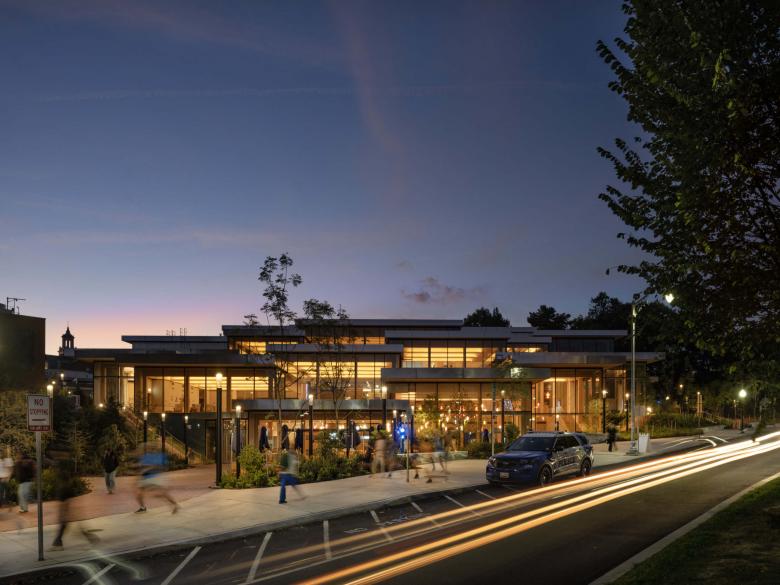
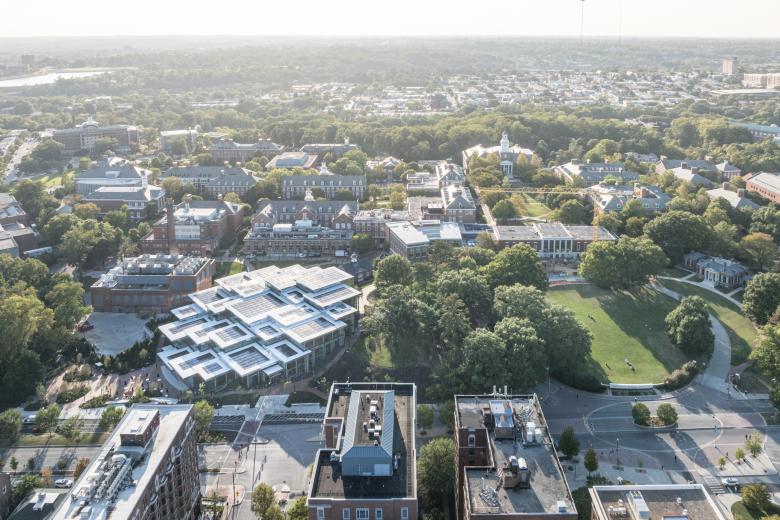
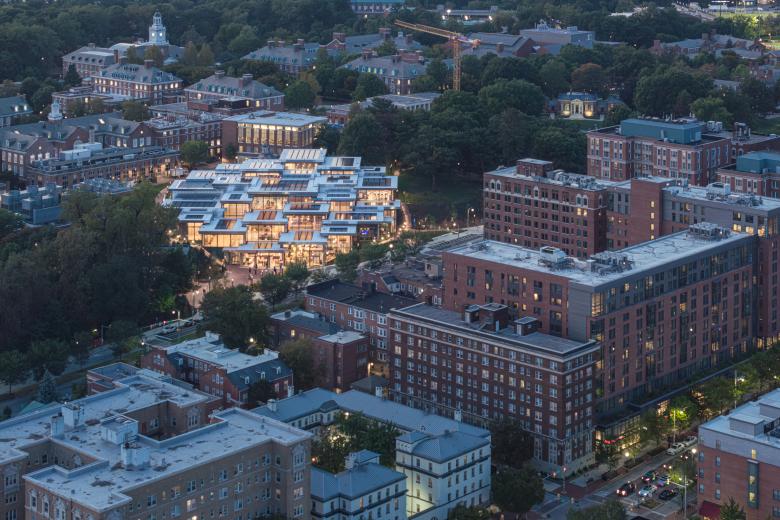
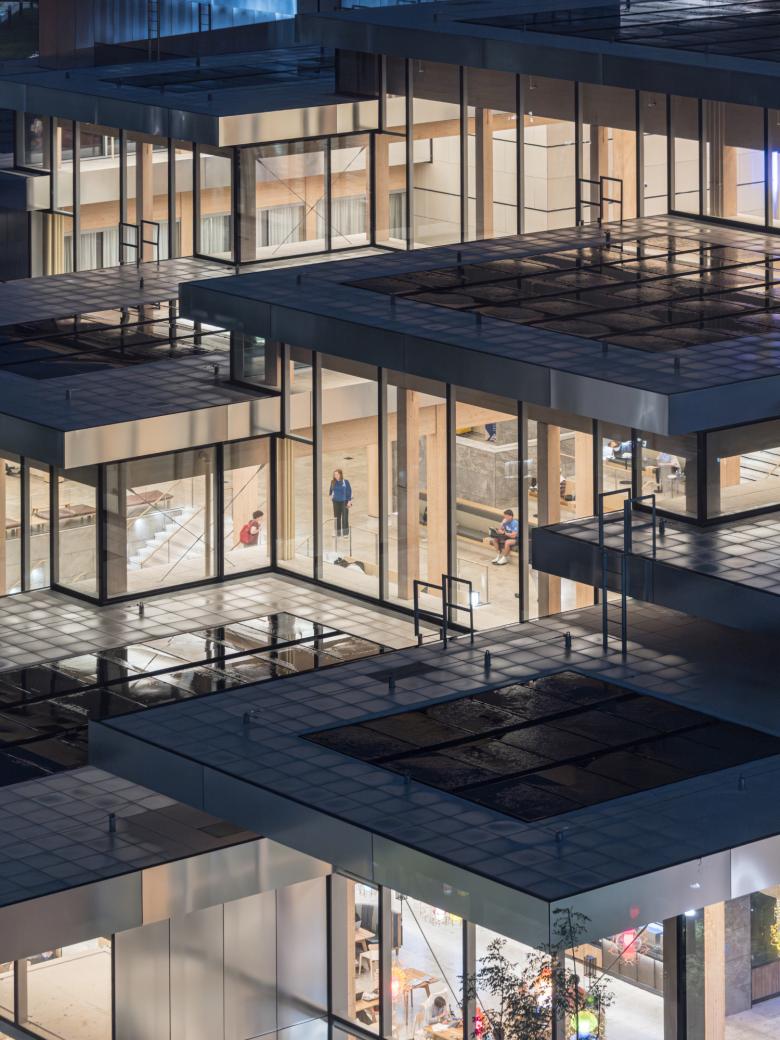
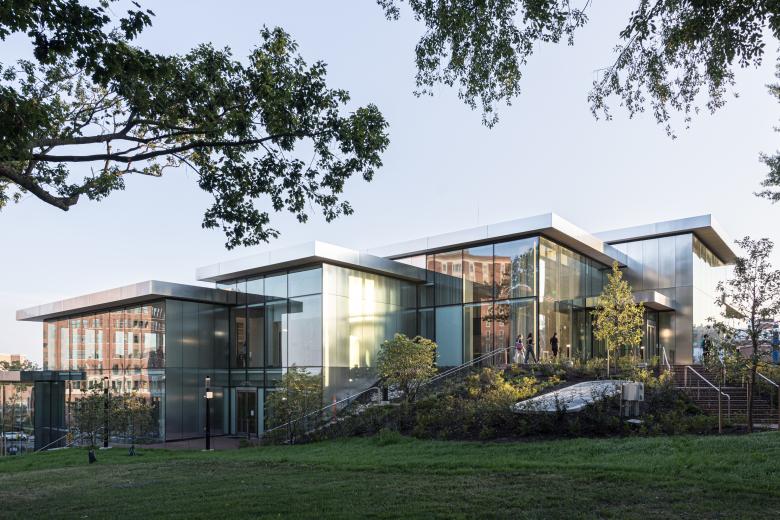
Located at 33rd Street and Charles Street, at the nexus of the Homewood campus and the surrounding neighborhood, the building was conceived as a series of cascading, mass timber-framed volumes with flat, cantilevered roofs topped with nearly 1,000 photovoltaic panels, which generate approximately half of the building’s electricity. The resulting “village” of 29 pavilions is carved into its 30-foot sloped site, allowing direct entry on all four levels, enhancing accessibility while maintaining a human scale. Exposed wood columns and ceilings are connected by an expansive glazed façade that floods the interior with daylight from all sides and offers passersby views into the ever-changing mosaic of student life within.
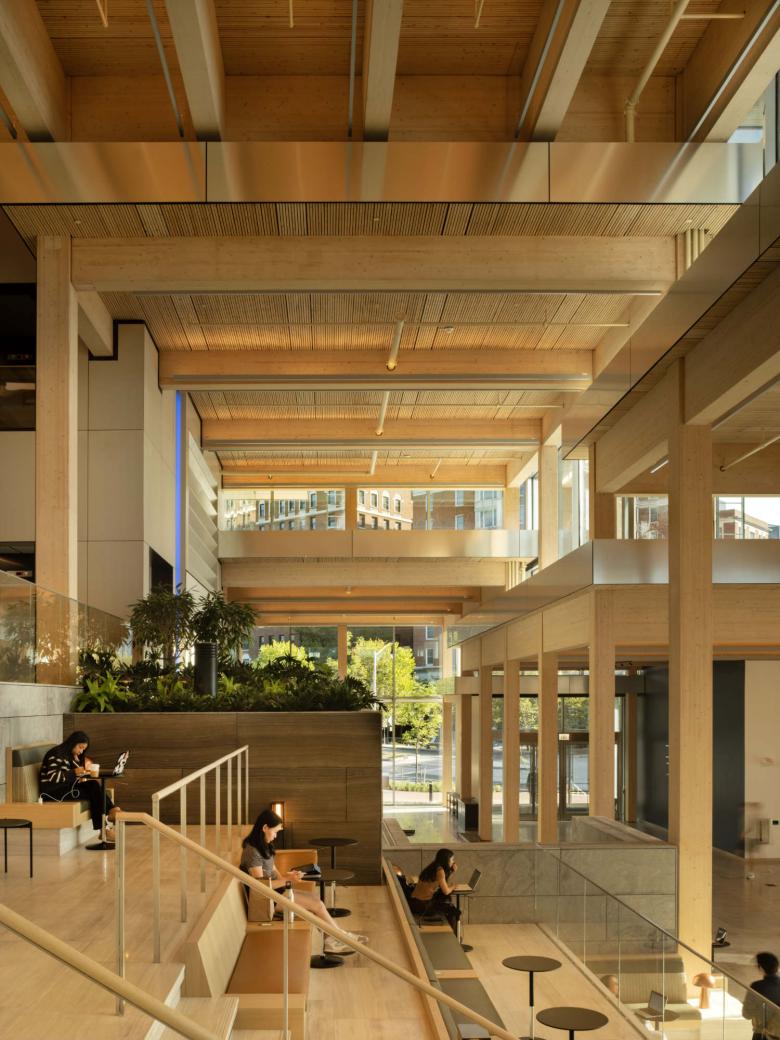
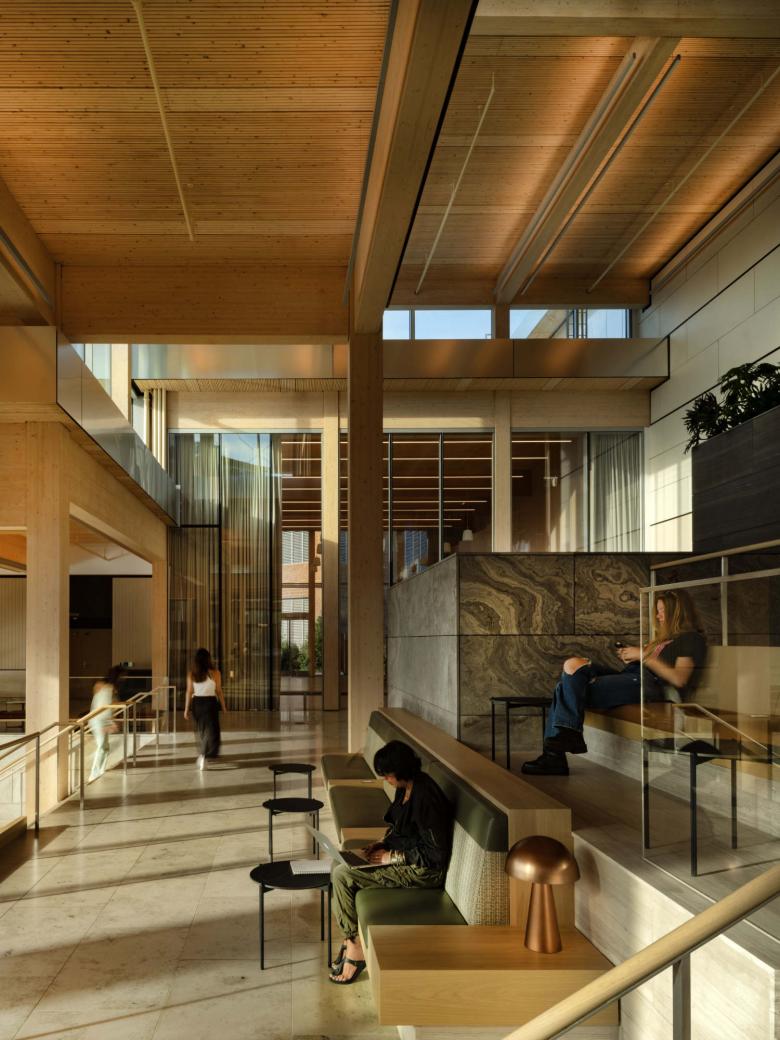
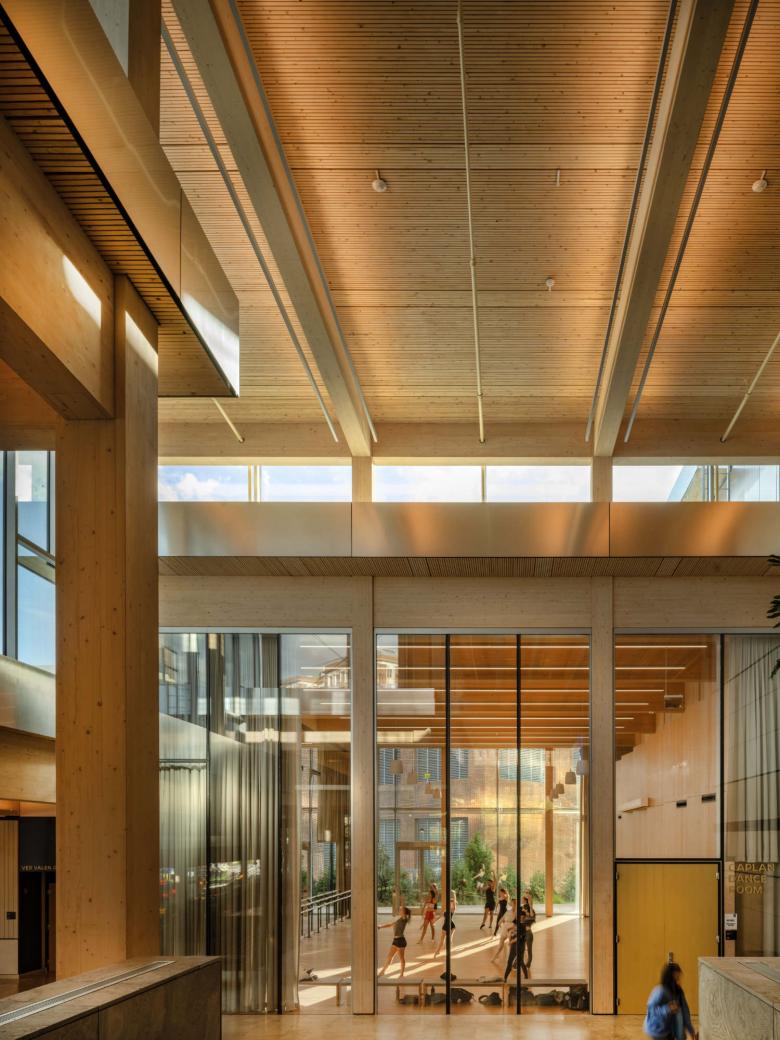
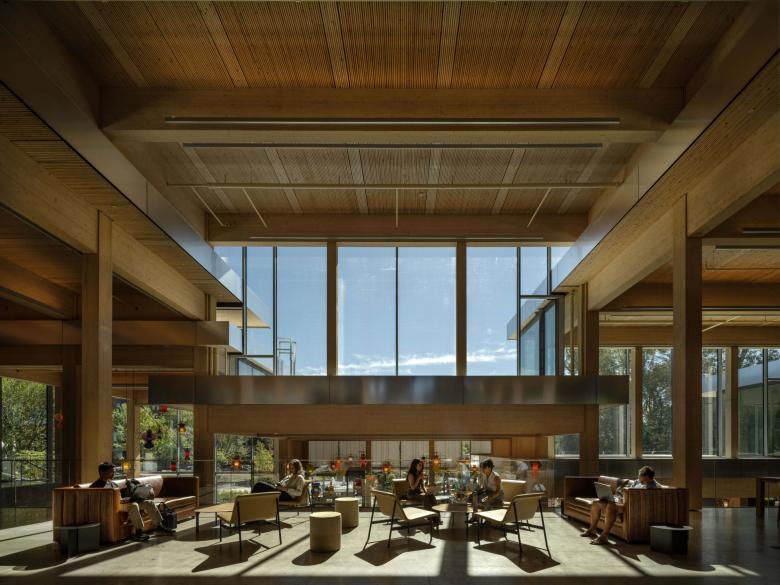
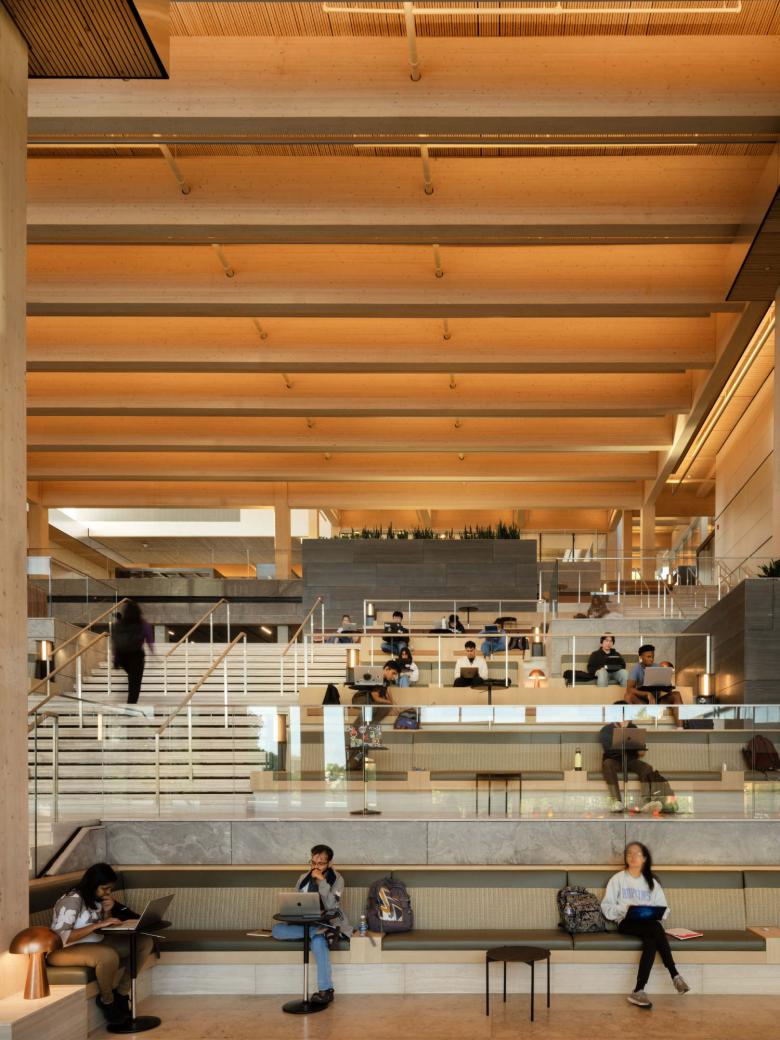
The Center’s interior is a fully integrated lifestyle hub featuring vital, non-academic services that surround and support scholarship, including collaboration, dining, socializing, creating, and performing. The building’s unique structural grid informed the orientation of the various programmatic needs. Lounges and multipurpose rooms accommodating student exhibits, community meetings, gaming, health and wellness, and more radiate around a central communal stair that connects all four levels and incorporates seating and planters with lush greenery. This soaring atrium serves as the Center’s “Living Room,” encouraging relaxation, studying, and gathering. The acoustic dowel-laminated timber (ADLT) ceilings, beams, and columns are complemented with natural materials and warm tones, including an array of limestone and white oak millwork.
Carefully integrated into a hill along Charles Street, the Bloomberg Student Center connects the main Homewood campus with student housing across the street. Its four accessible levels feature patios, indoor-outdoor gathering areas, outdoor seating, and green spaces created by MVVA—who are known for their innovative work on projects including the Brooklyn Bridge Park, Presidential Centers for both George W. Bush and Barack Obama, and the National September 11 Memorial & Museum at the World Trade Center.
The project reflects years of student input and over 1,500 voices from across campus, which directly influenced the selection of the design team. This feedback was essential in shaping the building’s programming—particularly the integration of multifunctional creative spaces that support dance, music rehearsal, painting, and ceramics, and spaces dedicated to health and wellness—as well as the inclusion of indoor trees and plants and other features that enhance connection to the natural environment.
- Jahr
- 2025
- Project Status
- Gebaut
- Bauherrschaft
- Johns Hopkins University
- Team
- Bjarke Ingels, Leon Rost, Elizabeth McDonald, Jason Wu, Gabriel Jewell-Vitale, Lawrence-Olivier Mahadoo, Agne Rapkeviciute, Alan Maedo, Alejandro Guadarrama, Alexander Matthias Jacobson, Andres Romero Pompa, Benjamin Caldwell, Bryan Hardin, Chi Yee Corliss Ng, Chia-Yu Liu, Christopher Pin, Cynthia Wang, Deborah Campbell, Ema Bakalova, Florencia Kratsman, Frederic Lucien Engasser, Guillaume Evain, Jakub Kulisa, Jamie Maslyn Larson, Jan Leeenknegt, Jesper Kanstrup Petersen, Jialin Yuan, Josiah Poland, Juan Diego Perez, Kaoan Hengles De Lima, Ken Chongsuwat, Kevin Hai Pham, Luca McLaughlin, Margaret Tyrpa, Matthew Lau, Mengzhu Jiang, Miquel Munoz English, Oliver Charles Thomas, Prasansiri Veerasunthorn, Ryan Henriksen, Terrence Chew, Tom Lasbrey, Tony-Saba Shiber, Tore Banke, Tracy Sodder, Veronica Watson, Xi Zhang, Yen- Jung Alex Wu, Yiling Emily Chen
- Design Architect
- Bjarke Ingels Group
- Interior Architect
- Rockwell Group
- Executive Architect
- Shepley Bulfinch
- Landscape Architect
- Michael Van Valkenburgh Associates
- Civil Engineer
- Whitman Requardt & Associates
- MEP Engineer
- WSP
- Structural Engineer, Exterior Envelope Consultant
- Knippers Helbig
- Security Consultant
- Thornton Tomasetti
- AV / IT and Acoustics Consultant
- Acentech
- Lighting Designer
- L’Observatoire International
- Code Consultant
- Code Red
- Theater Consultant
- Charcoalblue
- Elevator Consultant
- Lerch Bates
- Food Service Consultant
- Ricca Design Studios
- Door Hardware Consultant
- Campbell-McCabe
- Specification Consultant
- Kalin Associates
- Building Signage Consultant
- POR
- Donor Signage Consultant
- Aston Design
- Building Enclosure Commissioning
- WJE