Aimer Suzhou Headquarters
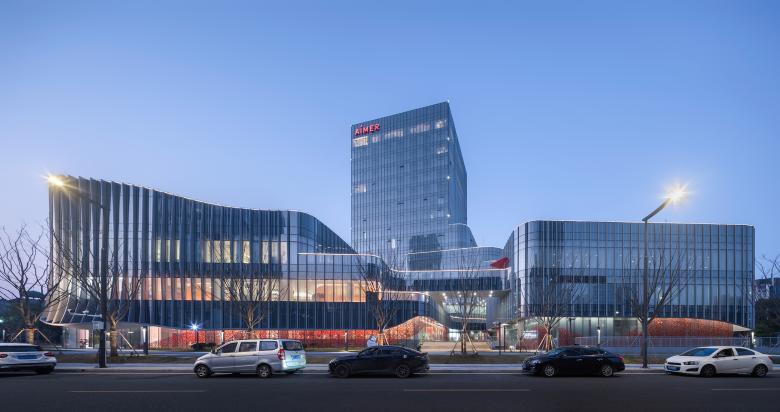
Aimer Suzhou Headquarters:
A Design Rooted in Experience - Blending Digital and Physical Spaces
Today, the lifestyle that used to be described in sci-fi stories has become a standard, anything that we desire, we open an app on our smart phones, order a product, and await its arrival at our doorsteps. Despite the convenience, something seems to be absent from the overall experience of the product. Why settle for just a transaction when you can immerse yourself in the brand and engage with it beyond the purchase?
The current and future of commercial environments hinge on a profound understanding of the users' offline consumption habits. Traditional and conventional product display is transitioning to experiential engagement. As targeted purchasing shifts towards online, today's offline commerce is not merely about product display, but also about creating spaces rich in immersive experiences.
The Aimer Suzhou headquarters embraces this transformation, offering an experience that fosters deep brand interaction and creates an environment that resonates on a human level.
"In designing Aimer Suzhou headquarters, we sought to create a building that reflects both the brand’s identity and the evolving nature of commercial spaces. From the fluidity of the façade to the spatial ribbon within the space, the integration of flowing forms, layered transparency, and multifunctional spaces offers a seamless experience, where architecture becomes an extension of the brand itself", says Binke Lenhardt, co-founder and partner of Crossboundaries.
Psychologist Alfred Adler once said, "Throughout their lives, humans seek a sense of belonging and value." As digital retail distances consumers from the tangible experience of shopping, physical spaces like Aimer’s new headquarters provide a vital point of connection, allowing visitors to engage with the brand through sight, touch, and curated experiences.
Location and Design Approach
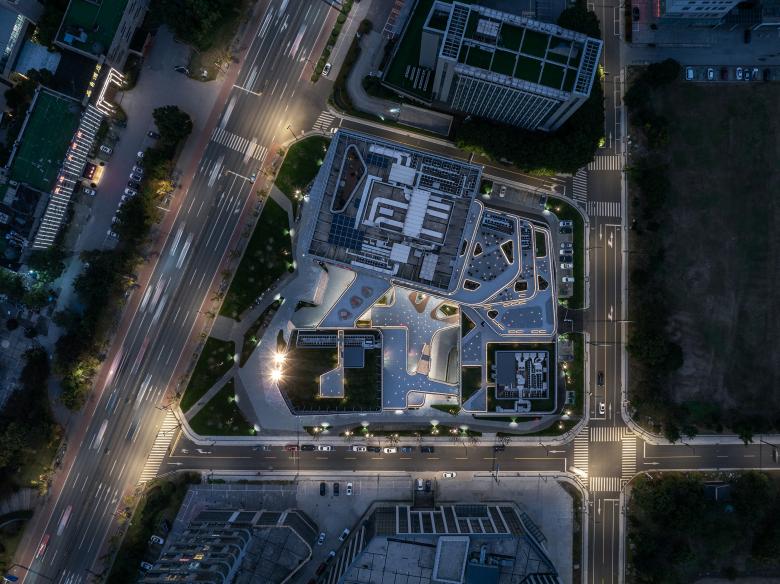
Located in Suzhou’s Fenhu district, where land and water intersect, the building benefits from its strategic position, as a transportation hub between Suzhou and Shanghai.
When Crossboundaries took on the project in 2019, construction had already begun with the basement completed. The redesign aligned the space with Aimer’s evolving brand vision and functional needs, integrating architecture, identity, and user interaction.
Reworking the Original Design
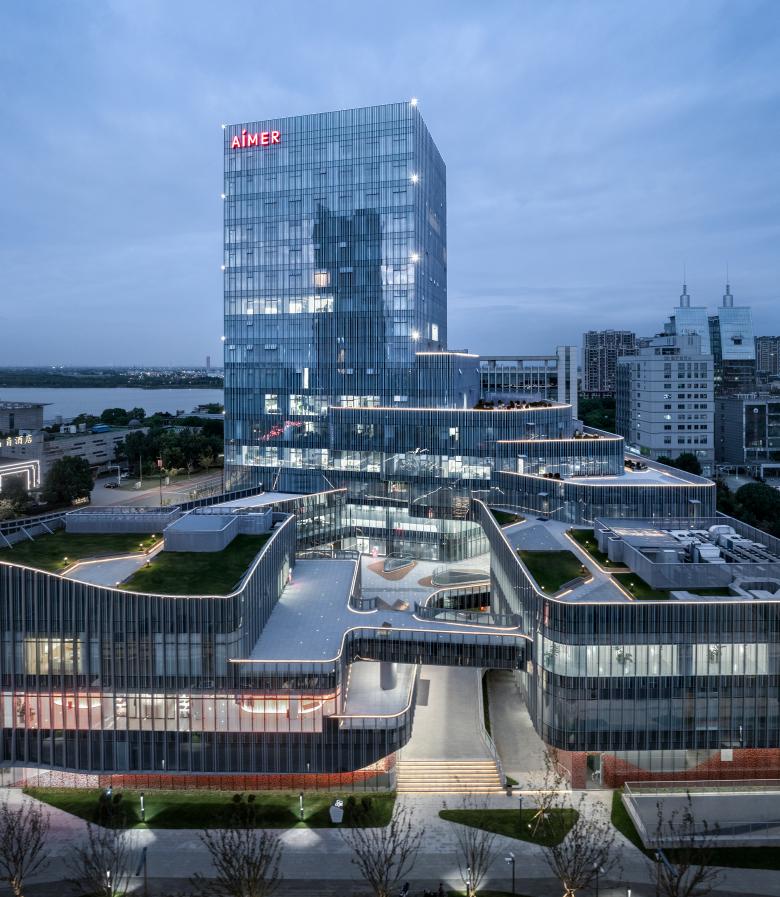
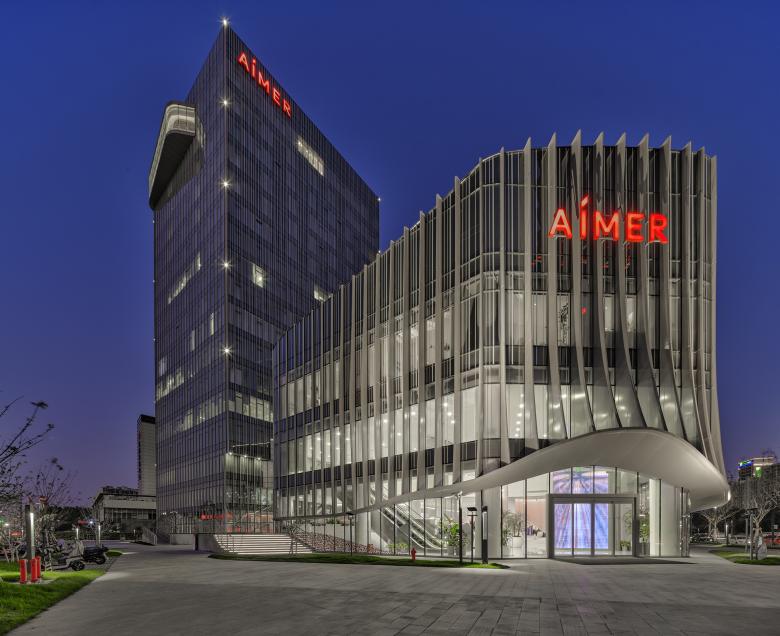
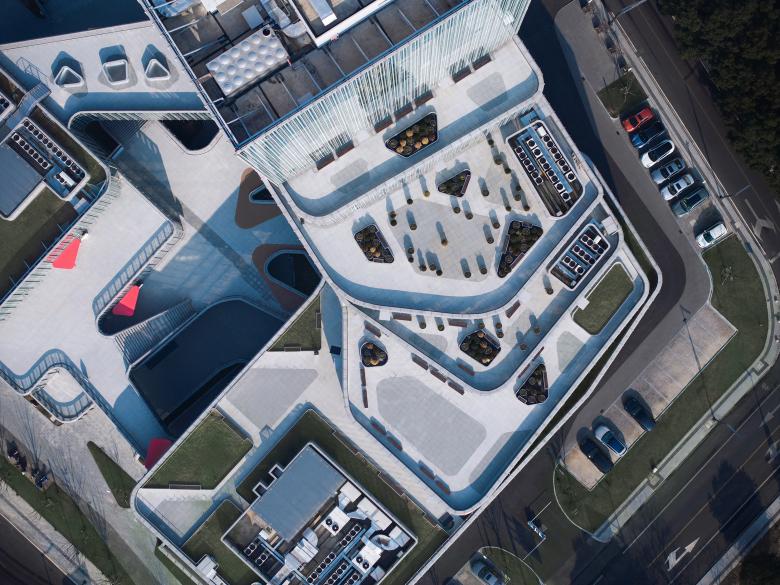
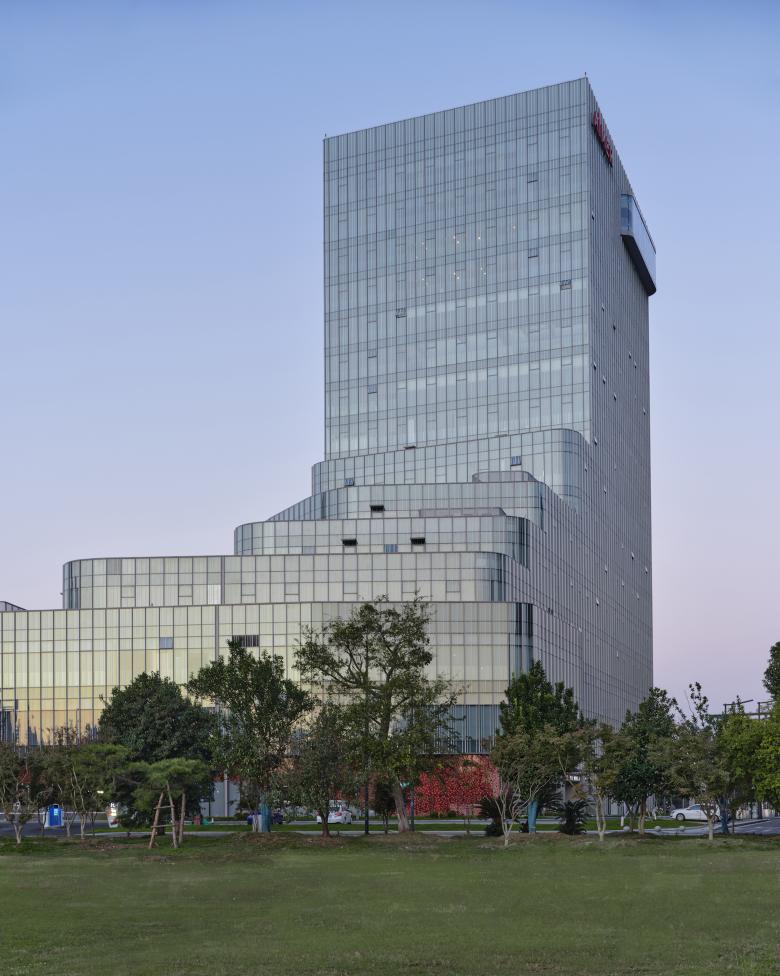
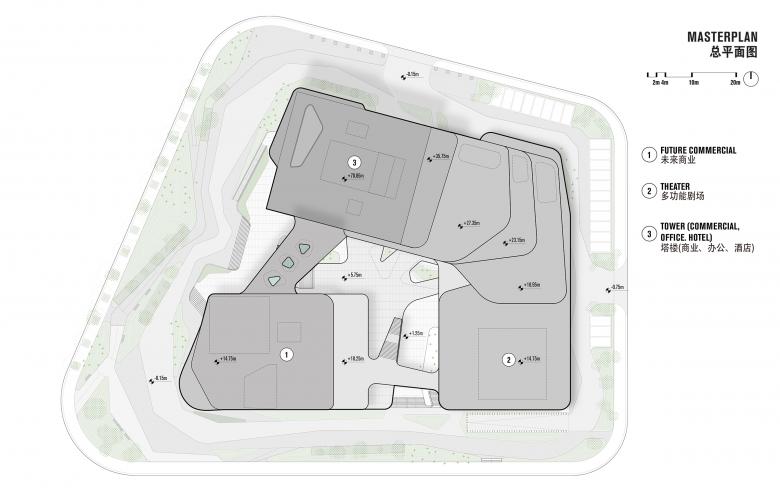
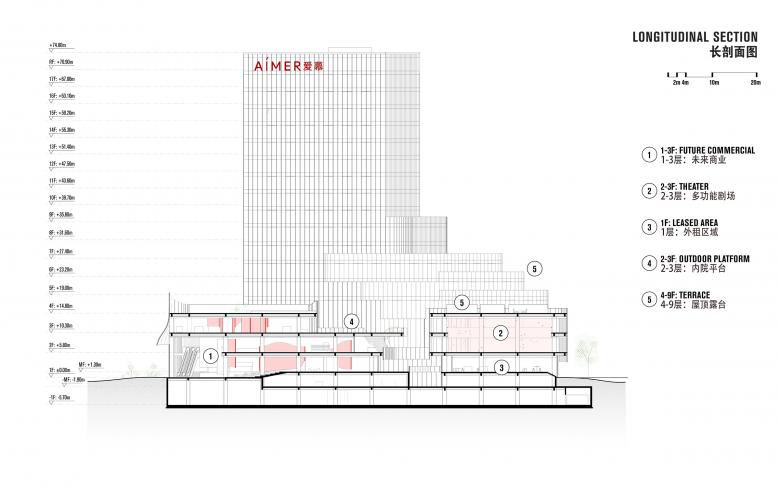
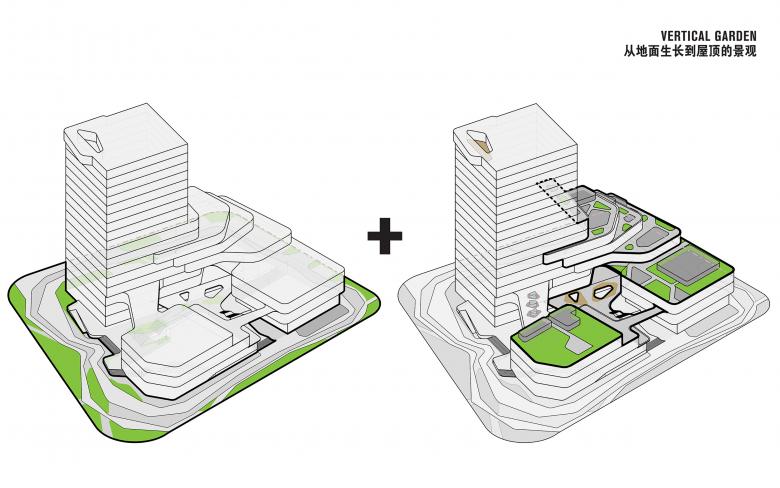
The original fragmented layout was reorganized into an integrated, multifunctional space, which enhances connectivity and program diversity. The redesigned complex consists of three interconnected volumes anchored by a 17-story tower. On the lower floors, the tower extends outward and gradually steps down into terraces, visually connecting the architecture to its surroundings.
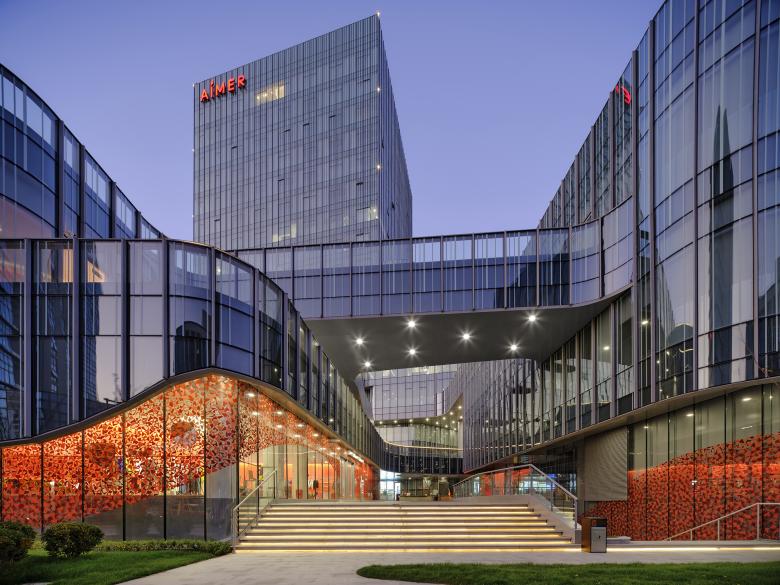
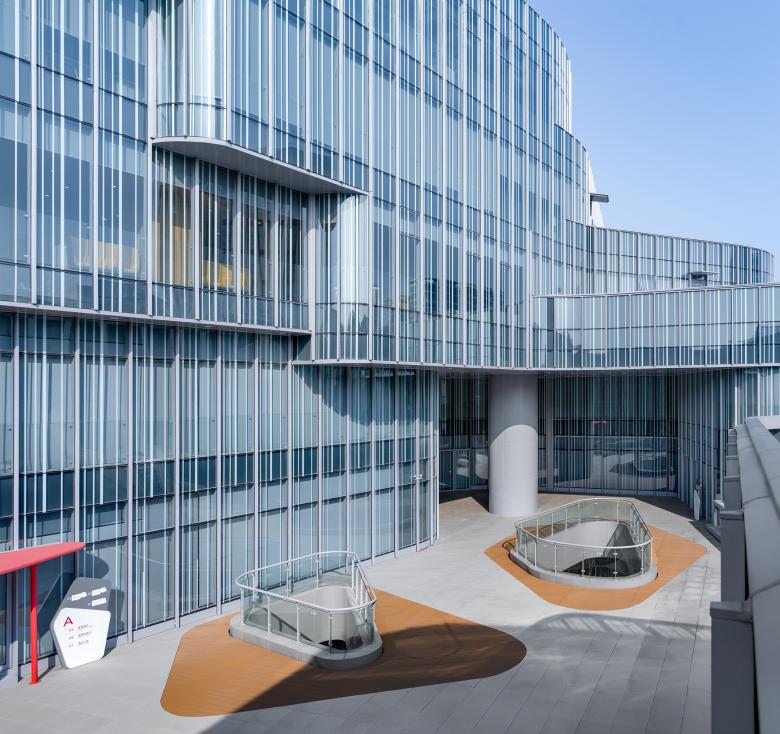
Between the buildings, an accessible organic landscape was introduced, forming two overlapping platforms that serve as both transitional and connective spaces. Grand outdoor staircases on the south and west sides, lead visitors into a layered environment with organically shaped openings, mirroring the patterns used throughout the building’s design.
A Hybrid Program for Work, Commerce, and Leisure
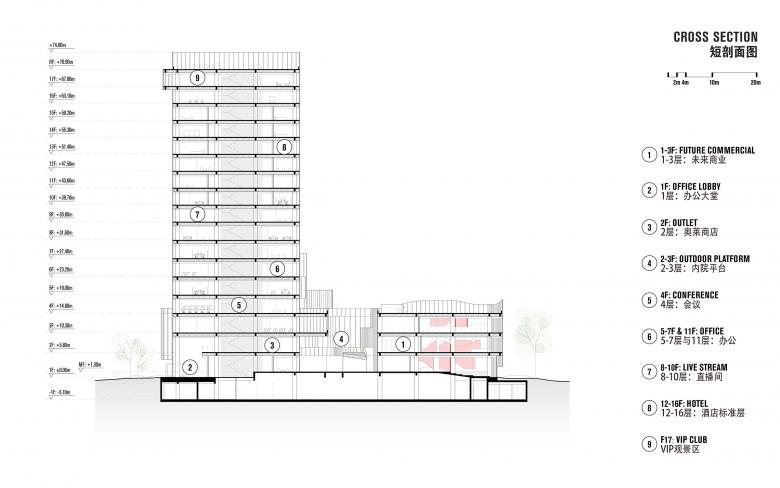
The Aimer Suzhou Headquarters integrates a diverse range of functions. The combination of Commercial areas, outlet, offices, live streaming, hotel, conference functions, multifunctional hall, and VIP reception, complete a building that caters to business travelers, shoppers, and creative professionals alike.
Beginning on the ground level, from the southwest into Aimer’s showroom and retail spaces, the immersive architecture enhances personalized shopping experiences. Exhibition and cultural spaces are made accessible from the northeast entrance via a grand signature staircase, expanding the building’s public engagement with arts and events. As we move upwards, the third floor provides a space dedicated to Aimer’s spa retreat, providing a wellness-focused environment. Above, office spaces on floors 4–7, with emphasis on transparency and flexibility, features open layouts, curved glass partitions, and wooden finishes, with red seating niches that subtly reinforcing Aimer’s brand identity. Continuing to the upper special functions, the live-streaming studios, located on floors 8–10, are places that bridges physical and digital commerce. Designed with stainless steel finishes and red neon lighting, these high-tech spaces complete the atmosphere for the production of real-time content. The 9th floor of the studio includes a public viewing area, where visitors can observe live-streaming operations through large windows, offering insight into the brand’s online retail strategy. Moving past the studios, the hotel, located on floors 11–16, offers a cozy retreat with warm, natural materials and panoramic lake views. Wooden finishes, white surfaces, and gray woven flooring are complemented by curated artworks. The hotel interiors provide a tranquil contrast to the more vibrant public areas below. Finally, the 17th floor of the tower is the executive level, offering unobstructed views of the nearby lake and surrounding landscape through an extruding panoramic glass window.
"Architecture has the power to shape experiences.
We targeted to design a space that goes beyond functionality—one that fosters interaction, movement, and sensory engagement, every element is designed to enhance how people connect with the space and with each other”, states Hao Dong, co-founder and partner of Crossboundaries.
Interior Fit-Out: Connection Through Design
The interior design, also by Crossboundaries, extends the architectural concept of flowing connection into the spatial experience. Curved elements with integrated changing rooms and shelving with metal surfaces, - the material selection and color choices contribute to a consistent visual identity to reinforce the brand’s core aesthetic.
Flowing Continuity – A Spatial Ribbon Connecting Levels
A key design element is the curved spatial ribbon in the showroom. The textured polycarbonate structure in light coral, visually penetrates the floor and extends across two levels, establishing a sense of continuity within the space.
The flooring throughout the ground floors is finished with rose-colored terrazzo. The material incorporates light flecks, creating a warm, organic texture. The polished surface reflects natural and artificial light, complementing the vibrant red tones of interweaving ribbon structure. Wide, angular steps lead visitors through the space, contributing to a seamless transition between areas, enhancing spatial flow. The interplay of the elements establishes a cohesive design language centered around openness and continuity.
A New Paradigm for Hybrid Spaces
The Aimer Suzhou headquarters represents a new model of hybrid commercial architecture: where multiple functions intersect in a unified environment. Through integrating retail, wellness, office spaces, and live-streaming facilities, the center fosters a diverse and engaging user experience.
The project demonstrates how commercial architecture can merge cultural, retail, and experiential elements into a unified space, redefining physical brand engagement by seamlessly integrating form and function.
Reorganizing the Functional Layout
Building upon the original structure, the functional layout of the building was significantly reconfigured. A shift from a fragmented, monofunctional composition—characterized by a rigid vertical separation—toward a more integrated and interactive design, aligns the project with modern business trends. The previous layout offered little programmatic diversity and limited user engagement, with compartmentalized functions and constrained spatial use. In contrast, the revised design introduces multifunctional zones, enhancing both vertical and horizontal connectivity in terms of circulation, functional overlap, and, importantly, a clear brand identity. By integrating a variety of uses on the same floor, the new layout improves accessibility and synergy, while creating flexibility for future business growth.
Architectural Features – Connecting Spaces and Enhancing Flow
The northwest entrance is marked by a free-shaped crimson colored staircase. Suspended from the ceiling with steel rods, the sculptural piece gives the illusion of a free-standing spiral, elevating the overall geometry of the space. The bold form enhances the arrival experience spanning three floors, serving as both a functional connector and a visual centerpiece, reinforcing the dynamism of the lobby. The staircase, normally utilized as the means of vertical circulation, also serves as a platform for brand events and as a fashion stage.
Throughout the building, the motif of fluidity continues. Transitions between levels, achieved through layered landscapes, intermediate platforms, and open staircases, solidify the continuity in the spatial sense, echoing throughout the entirety of the user experience.
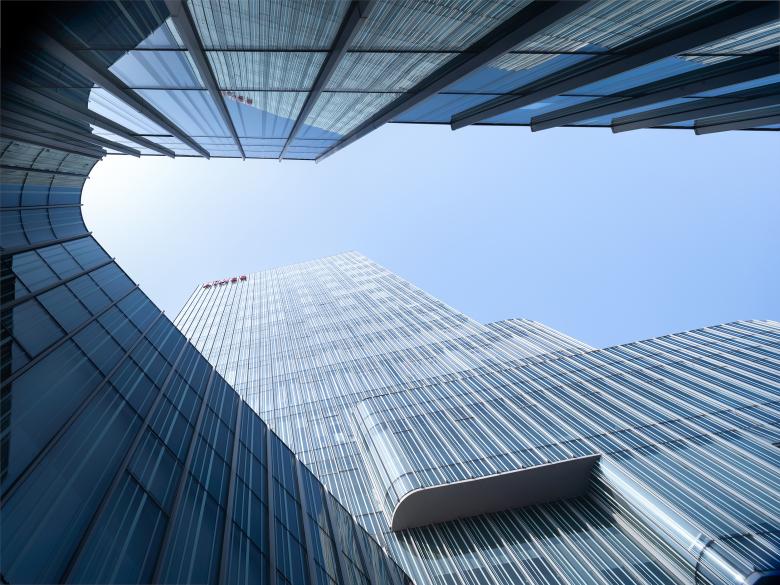
“The architectural design incorporates curved elements in the podium and a 17-story main tower, creating a distinct contrast between the horizontal and vertical components. The podium features smooth, flowing lines, while the tower introduces a strong vertical emphasis. In Chinese culture, this composition is associated with traditional landscape imagery, where undulating forms reference water and the high-rise structure suggests mountain peaks”, co-founder and partner of Crossboundaries Hao Dong adds.
Façade – Layers, Textures, and Brand Identity
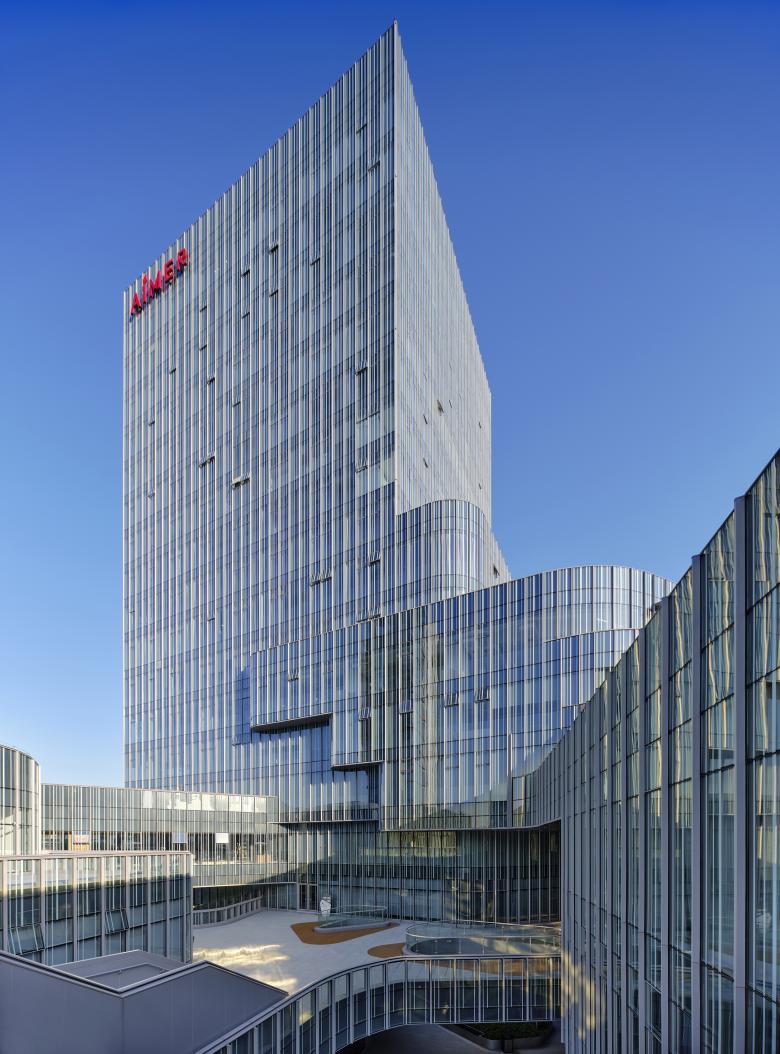
The façade incorporates a curtain wall system with a combination of vertical fins and white vertical lines. The pattern transition through the change in height, becoming denser as the floor levels get higher, adding intensity to the 17-story tall façade as well as subtly reflecting on the shift in the interior program.
At the podium level, the façade transforms into a more dynamic expression. Curved corners and recessed sections create a wave-like motion, enticing the more active and free flowing aspect in which the lower levels of the campus can be experienced in. The metal fins of the upper floors extend over these curvatures, contributing to the building’s fluid aesthetic while also enwrapping the transition as part of a holistic design.
At the base of the building, a secondary red patterned surface is also visible beneath the glass, resembling a lace or fabric, directly linking the façade to Aimer’s brand identity. This layering effect is particularly pronounced at the southwest entrance, where the glass appears to hover slightly above the ground, revealing the intricate pattern underneath.
The pattern is composed of irregular, angular shapes in two shades of red. The shapes have varying sizes and orientations, some of which overlap or intersect with adjacent shapes, creating areas in between which are solidly colored. The transparency within the overlapping sections of the shapes results in a layering effect, mimicking the characteristics of a lace.
The overall design appears as a complex arrangement of red forms, interacting with the background.
Aimer’s headquarters reflects a shift towards integrated, experience-driven architecture, where different functions come together to create a dynamic flow between commerce, hospitality, and brand storytelling.
The building is not limited by one single function; it's built on adaptability and interaction. This approach directly reflects how Crossboundaries design spaces that foster stronger connections between people, products, and place.
- Edificis d'oficines
- Retail + Stores
- Sales d'Exposicions
- Hotels + Hostals + Pensions
- Centres comercials
- Any
- 2025
- Client
- Aimer Co. Ltd.
- Team
- Binke Lenhardt(Partner in charge), DONG Hao (Partner in charge), GAO Yang (Lead Architect), Marijana Simic, Silvia Campi, HUANG Biao, Ivan Chen, Sean Yu, HOU Jinghui, Elena Gamez Miguelez, Erik Chen, GAN Li