Approach the Shore
Current State of the Site
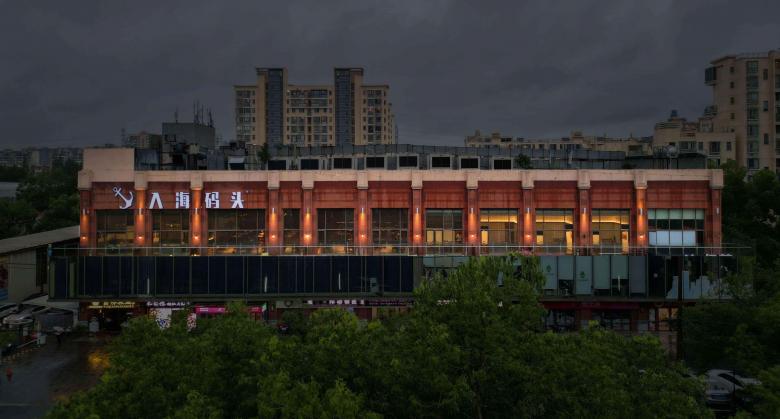
The project is located on Chunshen Road in Minhang, Shanghai. The site was originally a corner of a block-type commercial space facing an open neighbourhood with convenient traffic and surrounded by a mature residential community. The original building has high floor heights and ample depth, providing a good basis for renewal. As a community-based seafood stall that specialises in freshly prepared seafood, the new space needs to respond to the complex demands of high-frequency pedestrian flow and complex functionality, while at the same time using contemporary structural language to recreate the familiar and smoky living scene of the “stall”.
The original space of the project is regular, conventional and lacks identity. The primary challenge for the design was to explore the sense of place within the limited structure and to balance operational efficiency with the establishment of an emotional atmosphere.
Design Positioning
The ‘pier into the sea’ takes its meaning from the distribution place where the river enters the sea, which is a critical place where people, objects and emotions meet. Instead of reproducing the imagery of ‘seafood’ and “wharf” in a symbolic way, the design extracts the spiritual characteristics of the space, and takes ‘openness, enclosure, aggregation and flow’ as the organisational logic to build a space with a sense of wood rhythm and stone texture in a limited space. Instead, it extracts the spiritual characteristics of the space, taking ‘openness, enclosure, gathering and flow’ as the organising logic, and builds an urban fishing harbour with a sense of rhythm of wooden structure and stone texture in limited space. The design tries to build a daily residence with a sense of ‘docking’ in the urban neighbourhood, so that seafood dining can return to the freshness of food itself and the temperature of social instinct. In a series of construction strategies such as material, scale, light and interface, the designers emphasise the generation of a sense of place and respond to the disappearing “public eating space” in urban life.
Design Strategy
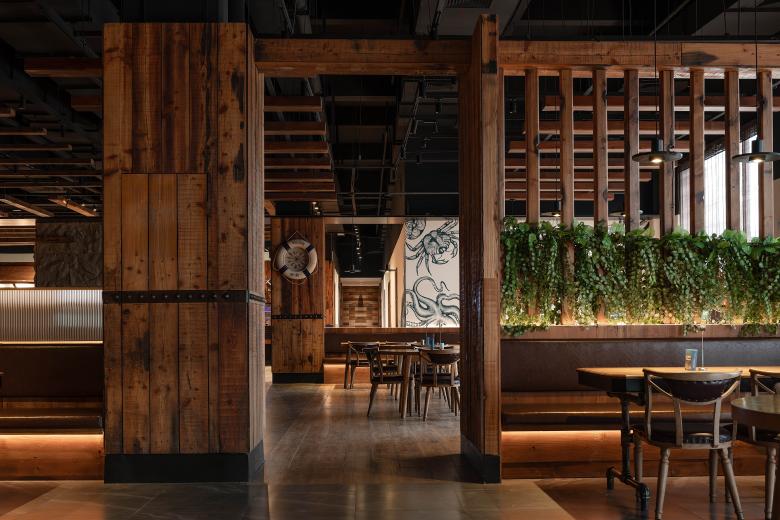
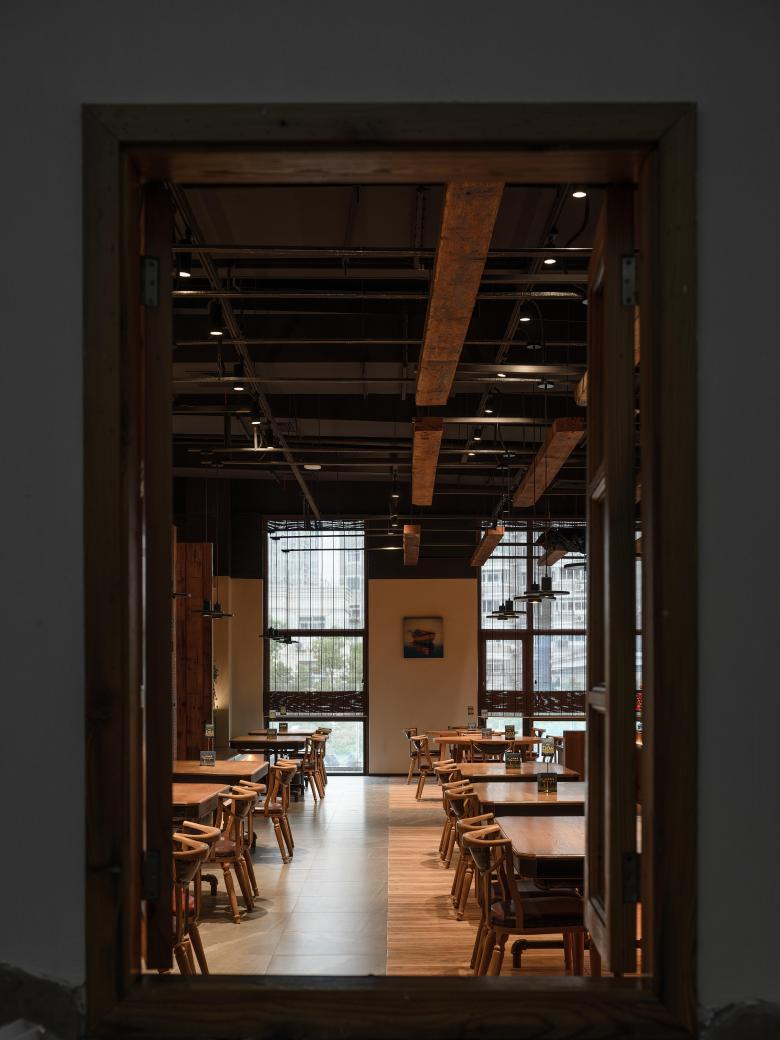
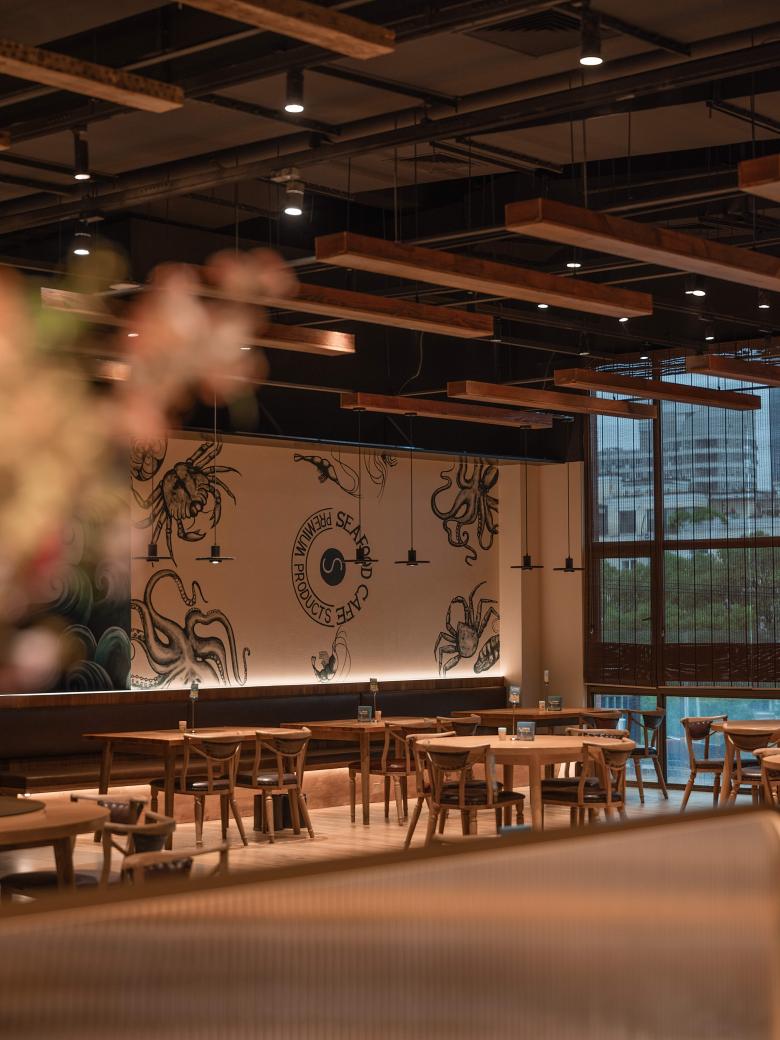
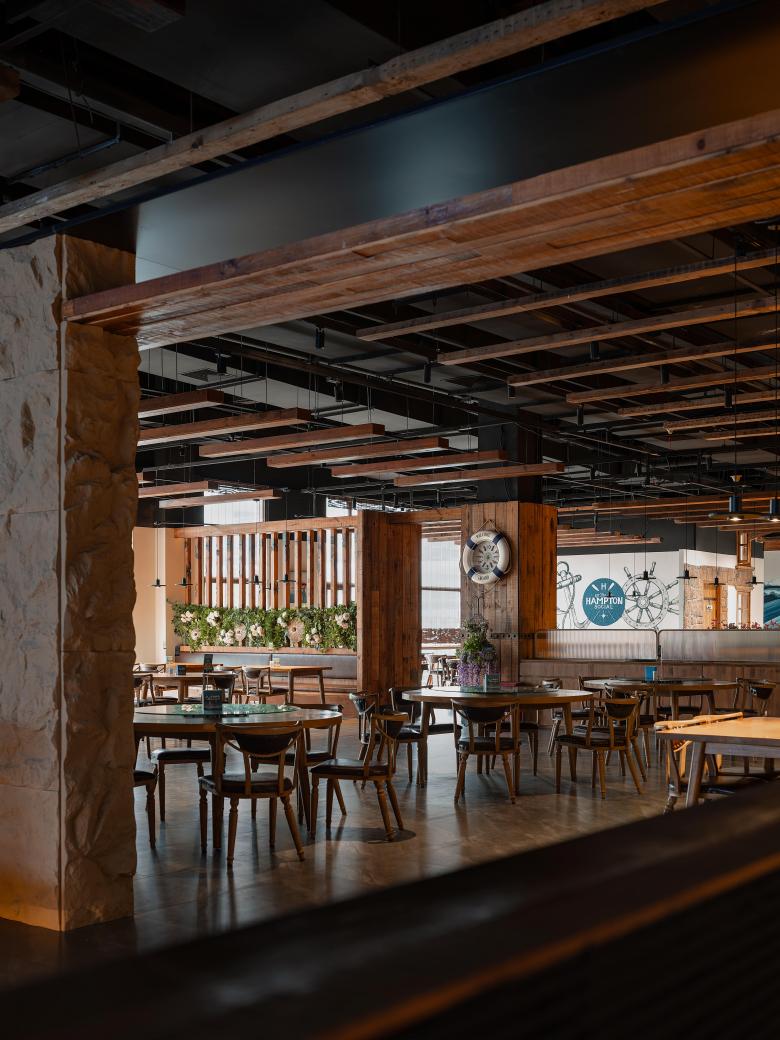
The project organizes the interior space through a tripartite strategy of structure, material, and atmosphere. It retains the openness and lively spirit of a traditional seafood street diner (“dapai dang”), while reinterpreting it through contemporary spatial methods. This is achieved by reconstructing timber frameworks, layering lighting strategies, embedding circulation paths, and introducing moments of enclosure—thereby aligning functional efficiency with spatial storytelling. The overall interior is divided into a three-part sequence: The street-facing reception zone welcomes guests with an open layout and a display ice pool, evoking the coastal imagery of “fresh catch landing ashore”; The central dining hall is governed by a system of timber frameworks that define order and rhythm, fostering a sense of gathering and social intimacy; The innermost section features semi-enclosed dining booths tailored for family meals and small-group interactions.
Into the Market
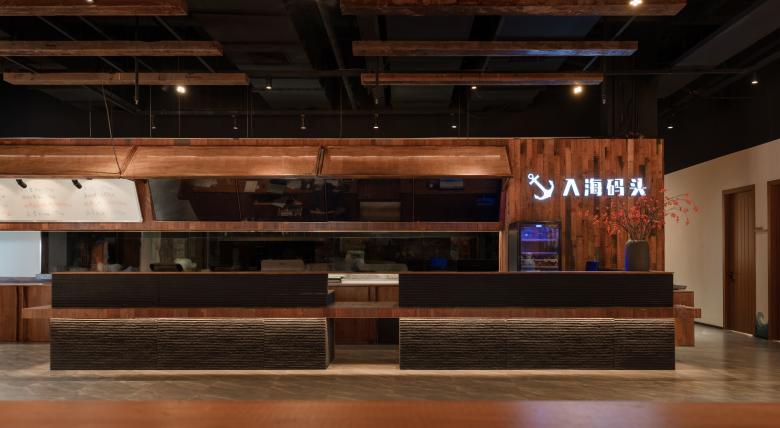
In this project, the bar, serving as the visual anchor and functional hub of the space, is positioned at the intersection of the restaurant's main axes. The design employs a monolithic dark oak panel with a matte finish, preserving the natural wood texture and hand-sanded traces to evoke a rustic and 沉稳 (stable) "ship 舷 (hull)" aesthetic. The bar's facade uses recycled wooden planks spliced in staggered joints, forming a structural language akin to the waterproof planking of fishing boats, thereby enhancing the narrative atmosphere within the "wharf" contextual framework.
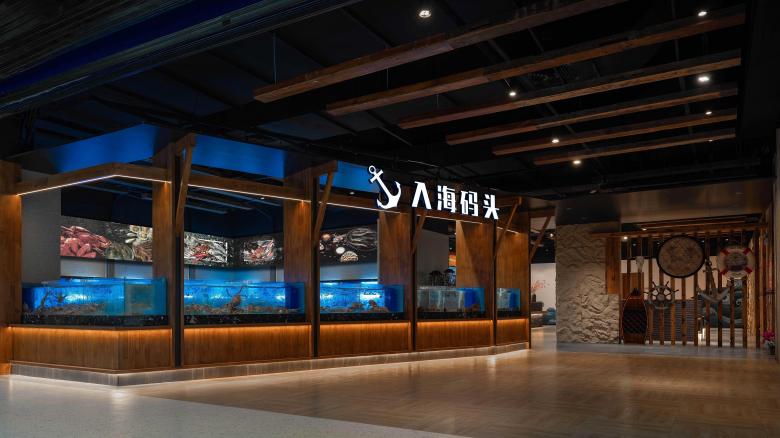
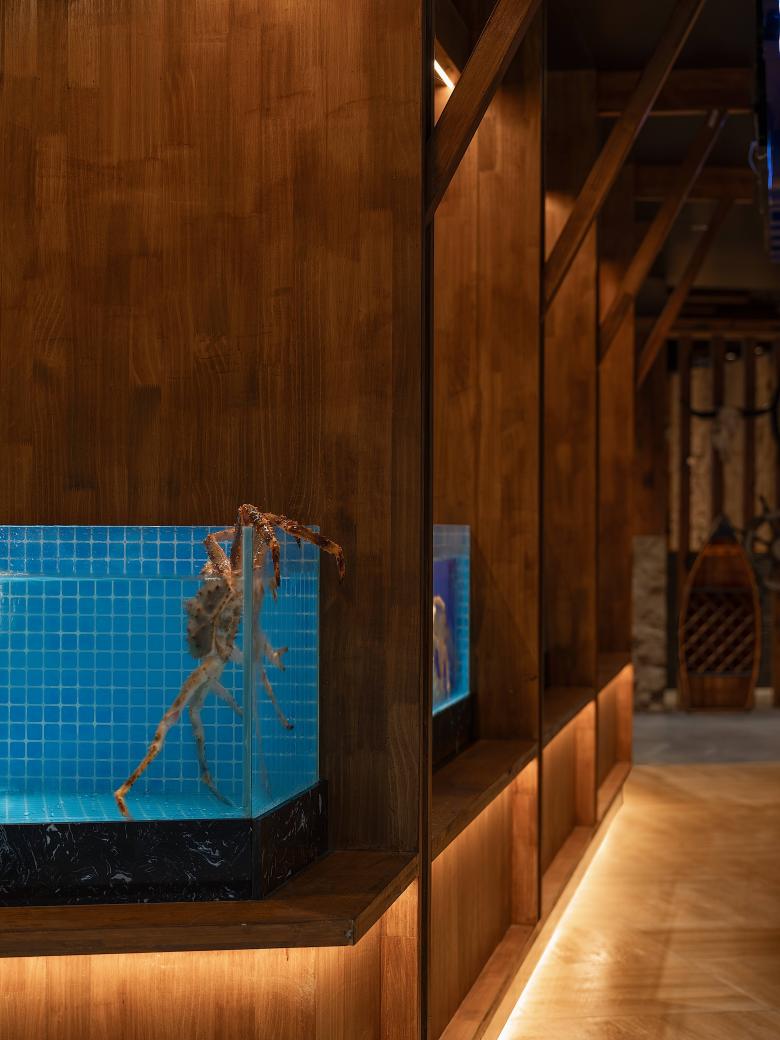
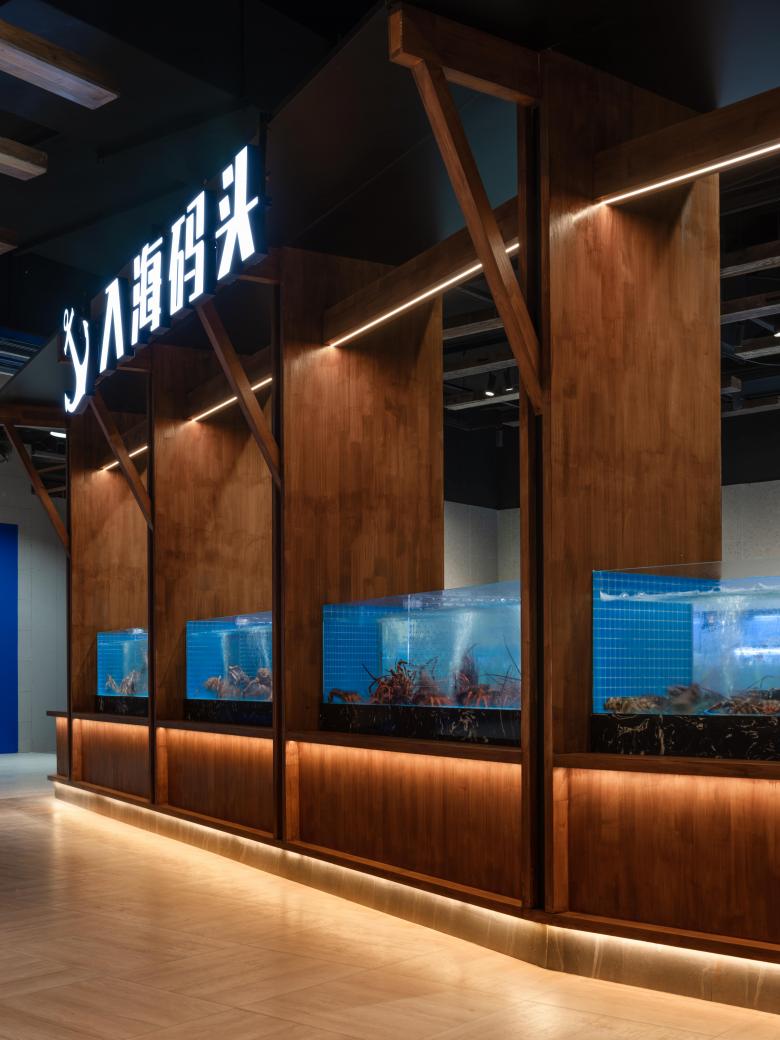
The seafood display area is located between the entrance of the restaurant and the main hall, which is the key node connecting the external market atmosphere and the internal dining experience. The design is based on the logic of the ‘dock to shore’ dynamic line to create a visual focus, and the entire surface of the customised blue aquarium glass fish tanks, forming a sense of experience similar to the ‘ready-to-eat’ seafood experience in the coastal fishing market.
The aquarium adopts low-reflective blue glass combined with stainless steel frame, and the internal zoned water circulation system ensures that all kinds of seafood remain in the best condition. The glass surface is treated with micro-fog, which produces soft refraction under light changes, creating a ‘sea atmosphere’ that seems like water but not water and fog but not fog.
Shared Table
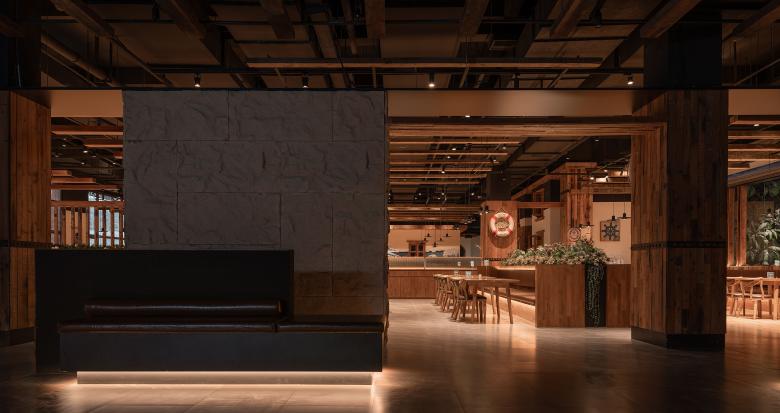
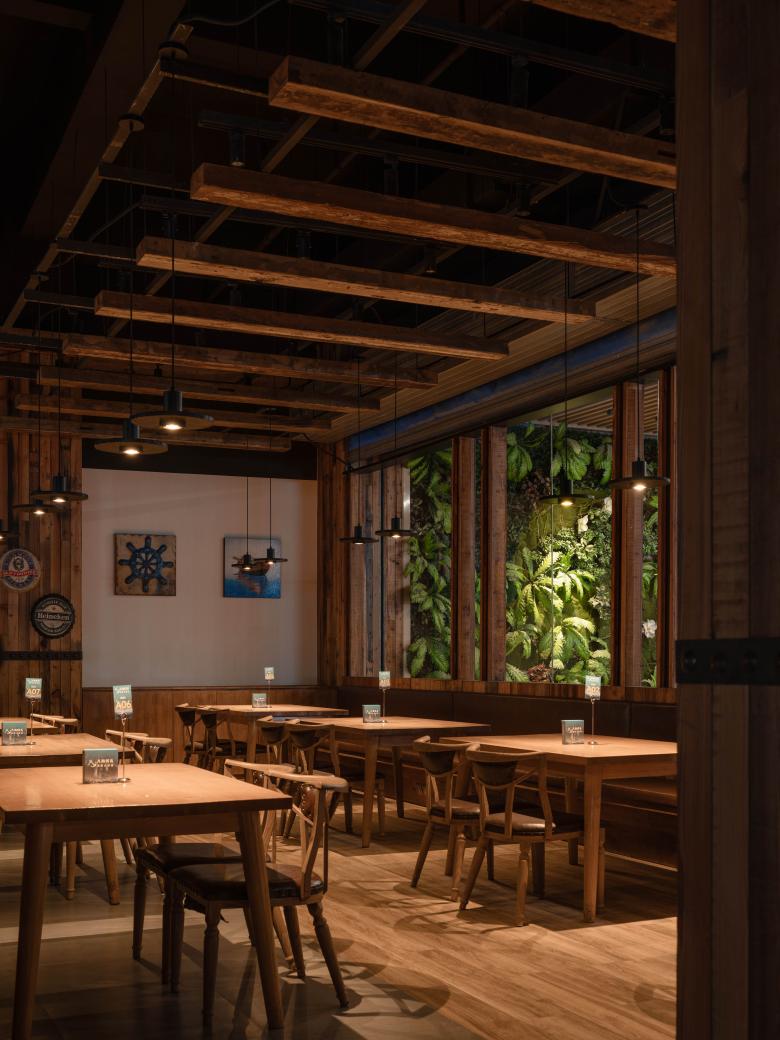
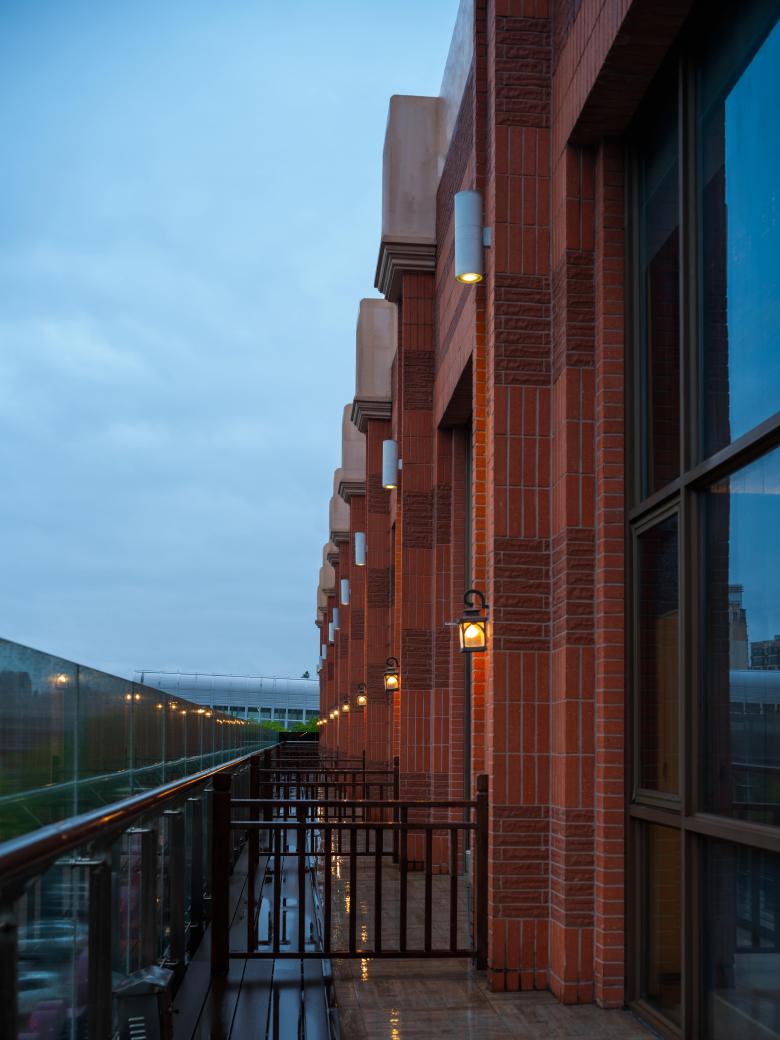
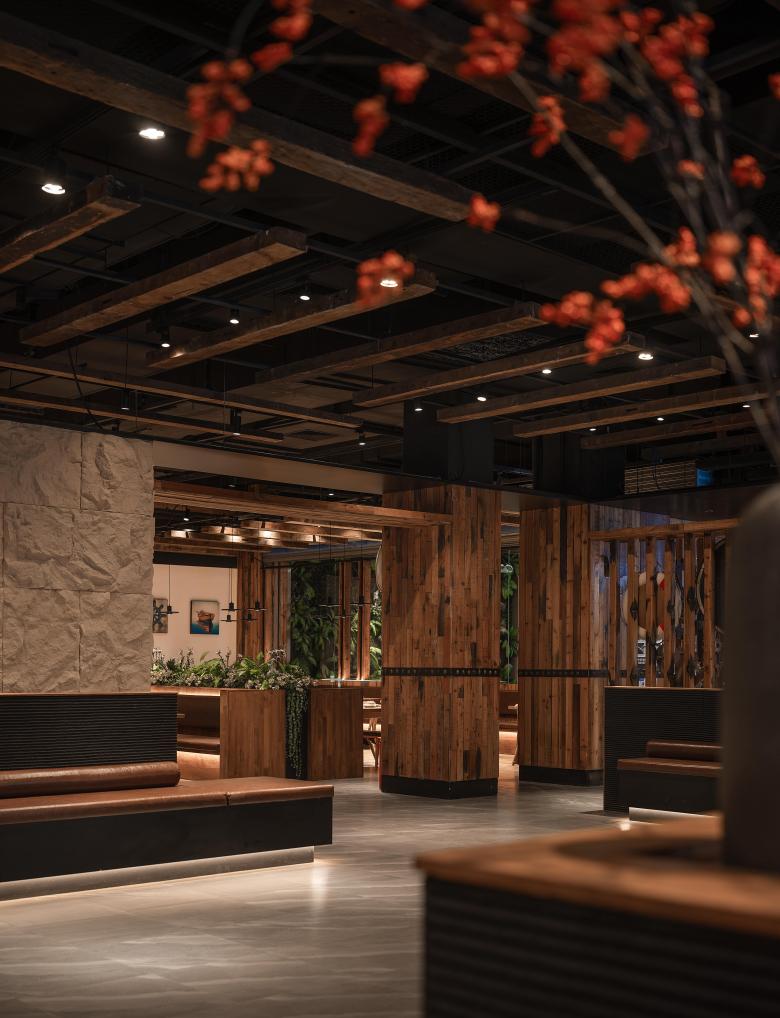
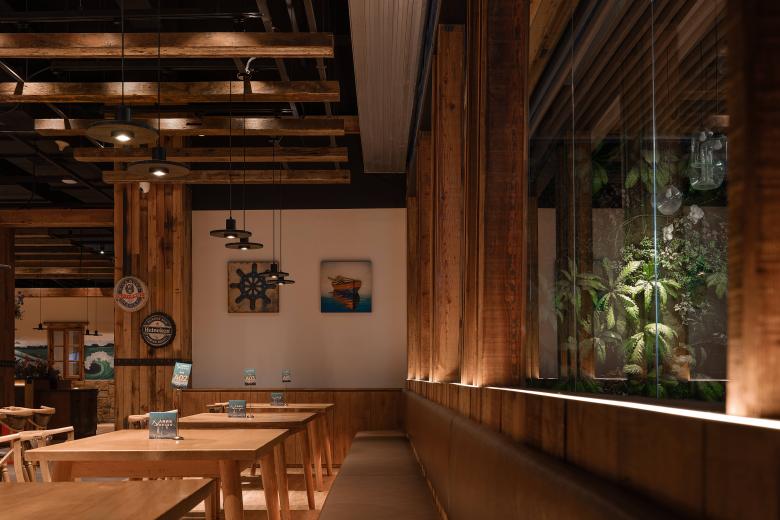
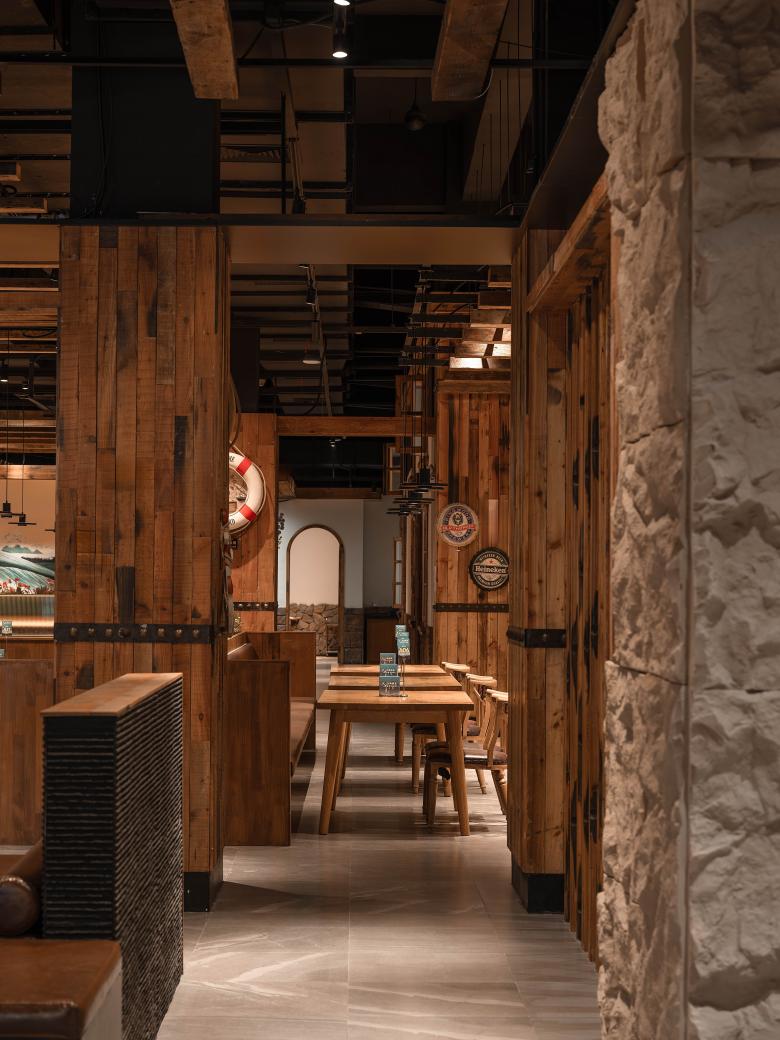
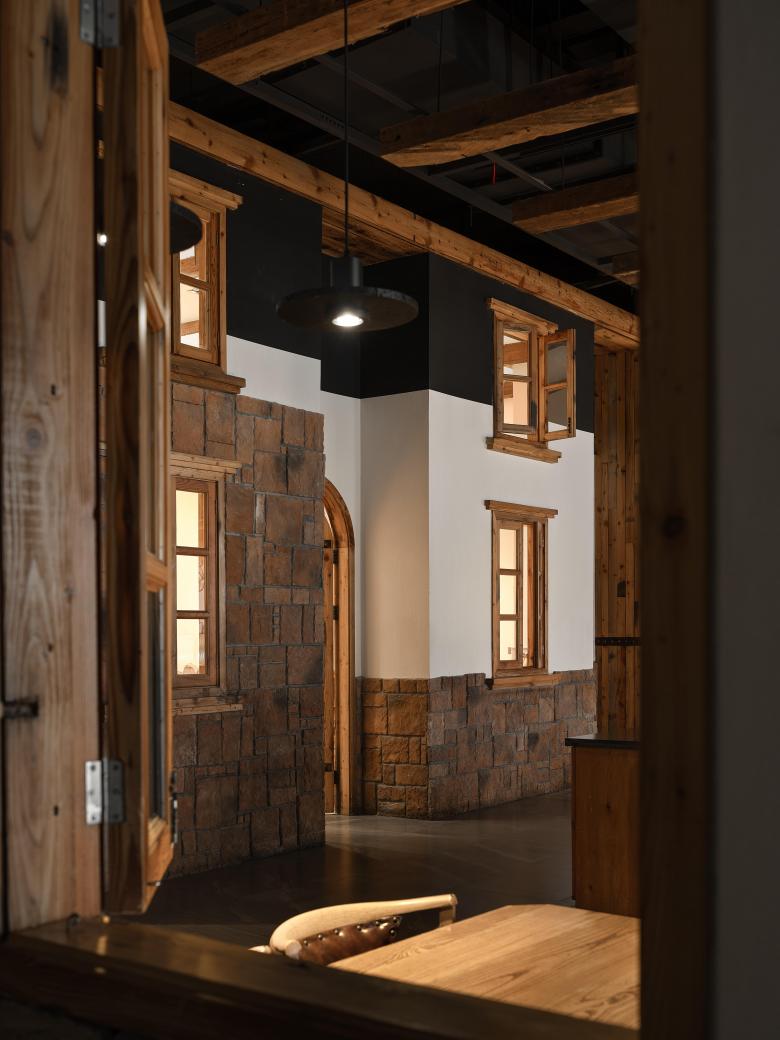
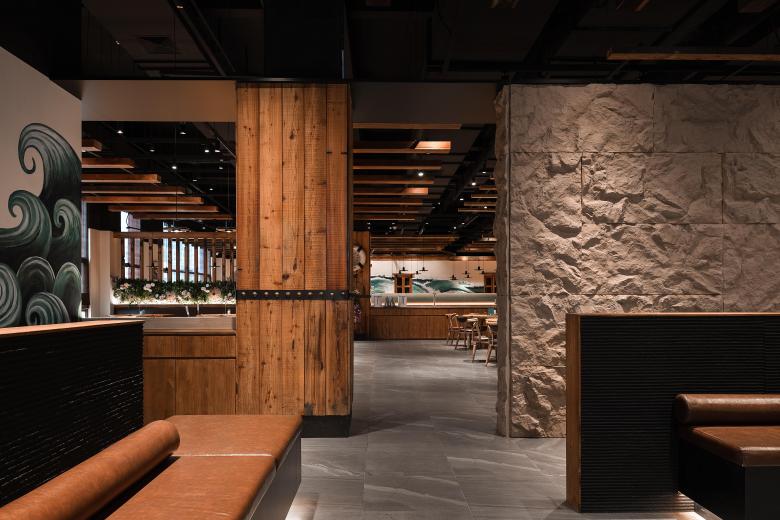
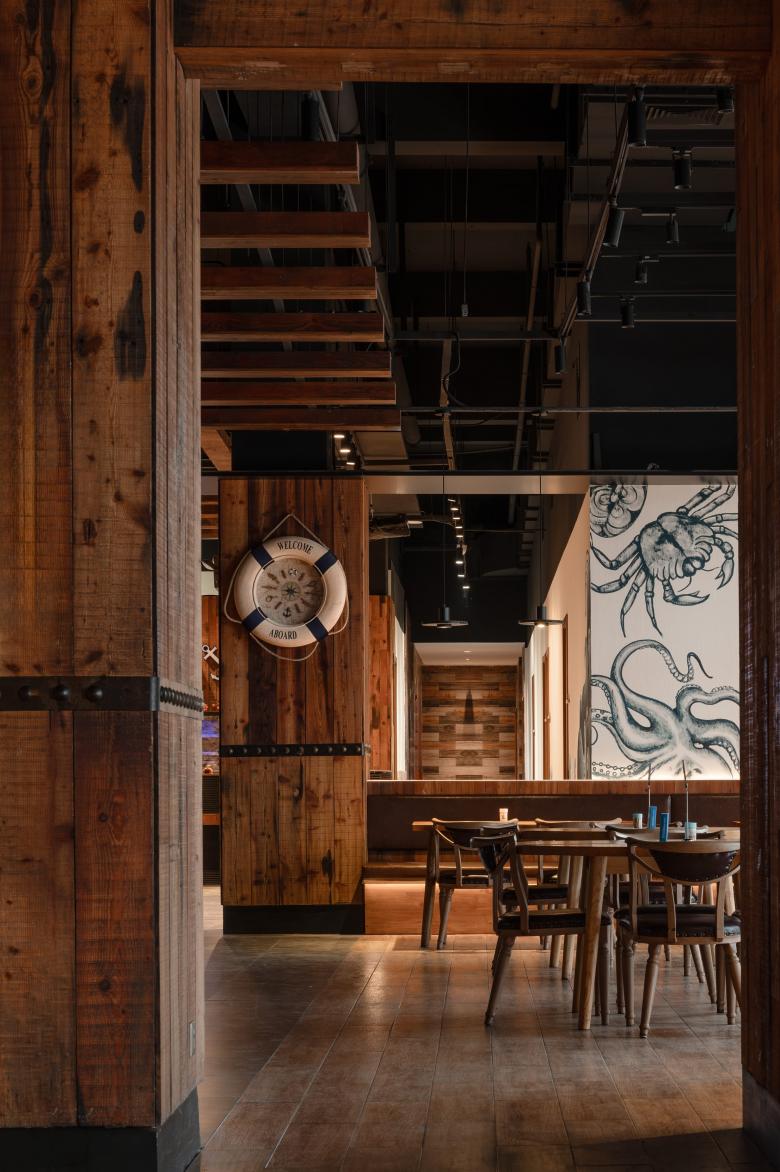
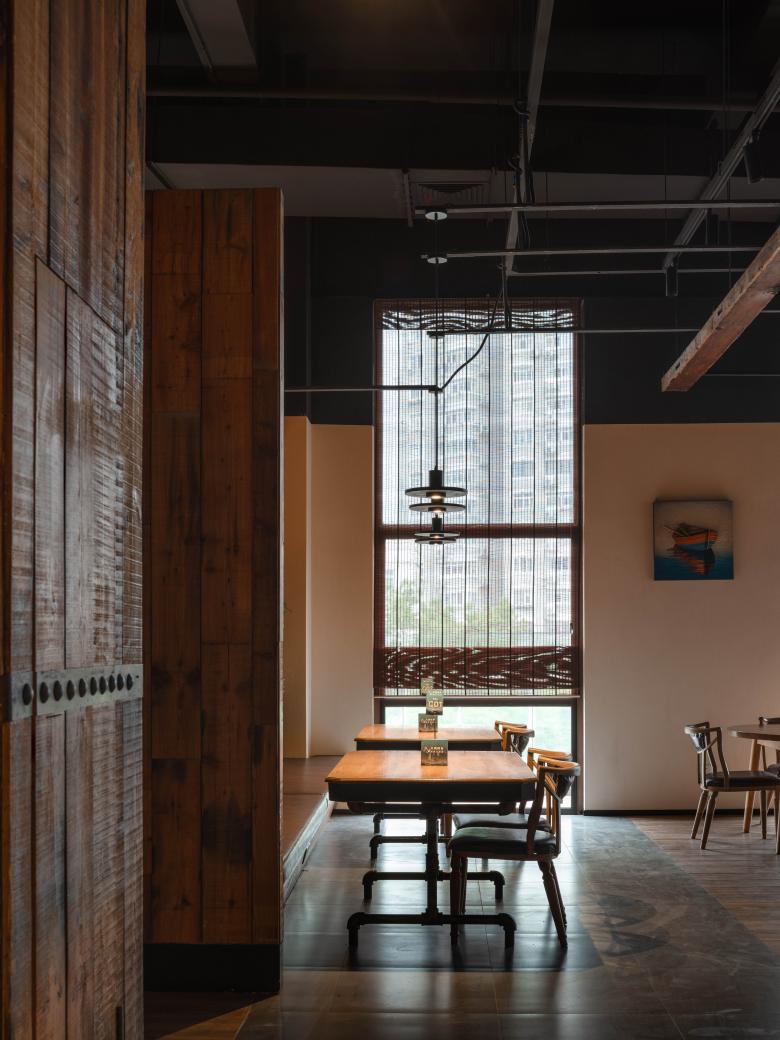
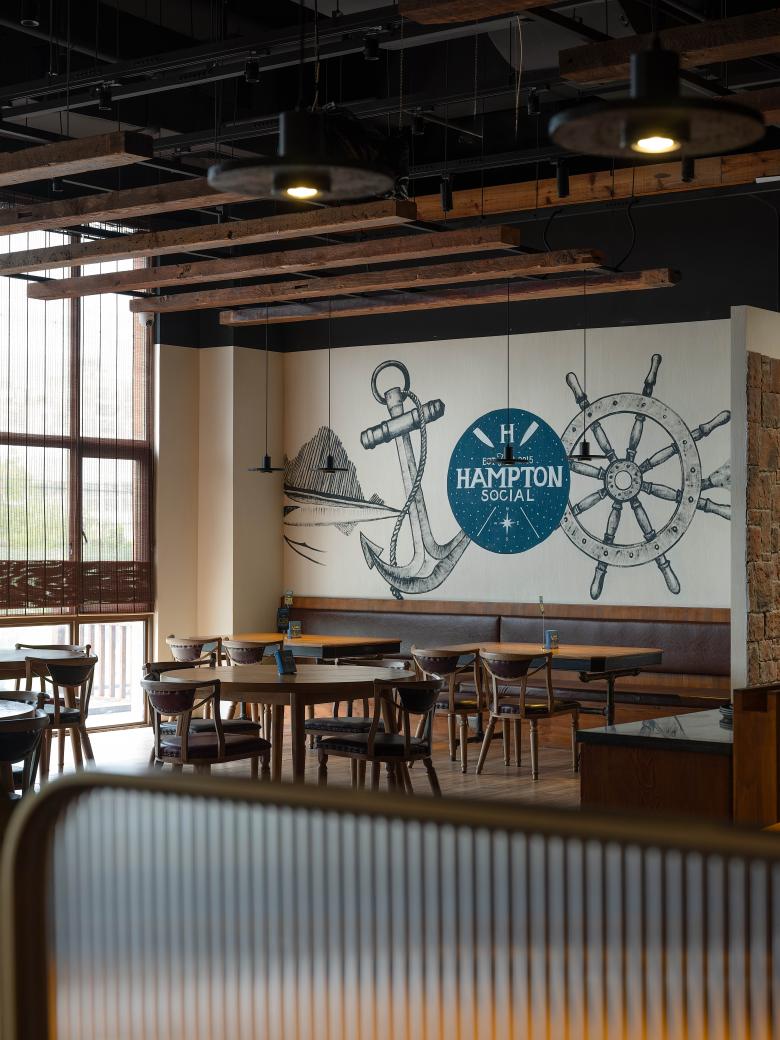
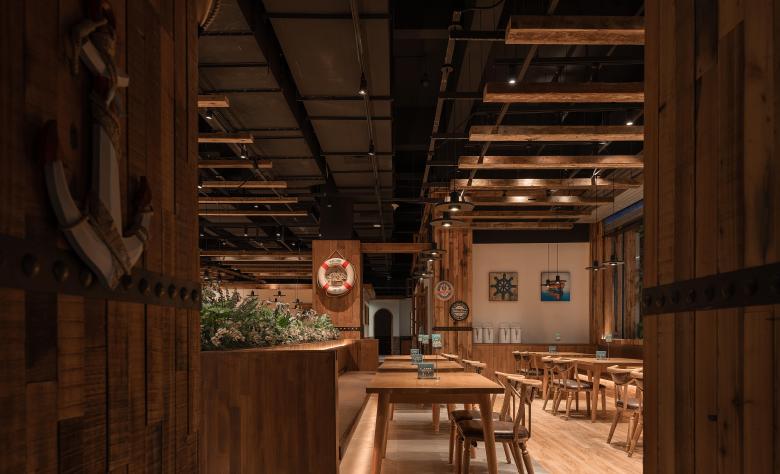
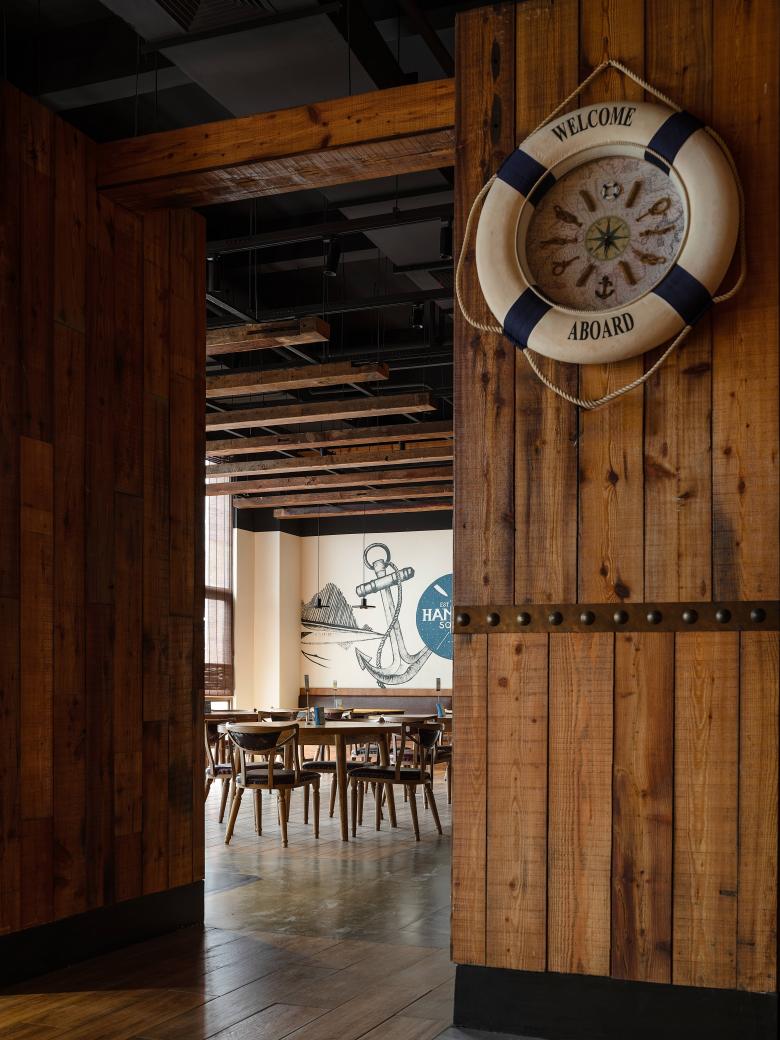
The core language of the interior space is ‘wood’, using a lot of recycled wood, dark-coloured solid wood panels, and old beams refurbished components to form the roof, partition walls and card seating interfaces, which gives the place a sense of warm texture and visual continuity. The walls are clad with local stone and plaster texture paint, presenting a low-lustre texture close to the roughness of the reef surface, which collides with the wood materials to form a cold and warm collision.
The goal is not to reproduce the image of a fishing port, but to extract its emotional atmosphere and structural logic—telling a story about belonging, waiting, and sharing in a contemporary spatial language.
Echoes of the Tide
We translated the truss systems of traditional wharves into the rhythmic timber beams of the interior; the salty haze of sea wind into diffused, low-level lighting; and the imagery of fishing nets, cranes, and pulleys into tectonic language—through joinery seams, ceiling grids, and detail articulations.Thus, the space is not about formal resemblance, but emotional resonance—offering modern urban dwellers a long-lost sense of connection and homecoming.
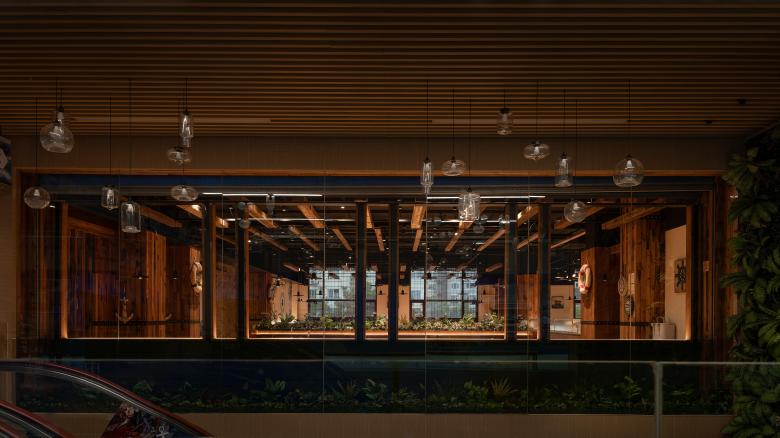
All the dining seats in the space are equipped with customised lamps, which are hidden in wooden beams or embedded in wooden frames for hanging, together with the warm light track spotlighting, to form an independent lighting feeling, avoiding the light pollution produced by large floodlight, so that each dining table has its own ‘microclimate’.
In the transition wall between the main dining room and the private room, the designer introduces a hand-painted mural based on the element of ‘waves’, depicting the dynamic imagery of tidal waves with abstract brushstrokes, injecting a touch of free and dynamic visual rhythm into the overall wooden space.
The texture of the stone forms rich shadow layers under the irradiation of the natural light and the point-shaped light strip, so that the atmosphere of the space is naturally switched between day and night; the wear-resistant and moisture-resistant characteristics of the stone are also suitable for the high-frequency use of the catering space to meet the functional requirements, and to enhance the physical properties of the overall space.
Into the Sea Wharf Seafood Restaurant
Back to Projects list- Location
- 上海市闵行区春申路333号春申里3楼, Shanghai, China
- Year
- 2025